

Valentino Fall/Winter 2026: Alessandro Michele’s Roman Requiem for Valentino Garavani

Palazzo Barberini stood as a silent witness to a seismic shift in the Roman fashion landscape. On March 12, 2026, Alessandro Michele presented his Fall/Winter 2026 collection for Valentino. It was a moment heavy with expectation and grief. Valentino Garavani, the house founder, passed away in January. This debut marked the first ready-to-wear show since his departure. The atmosphere in Rome was one of somber reflection mixed with intense curiosity.
Michele did not choose the frantic energy of Paris. He chose the historic weight of Rome. This was a homecoming that felt like a philosophical meditation.
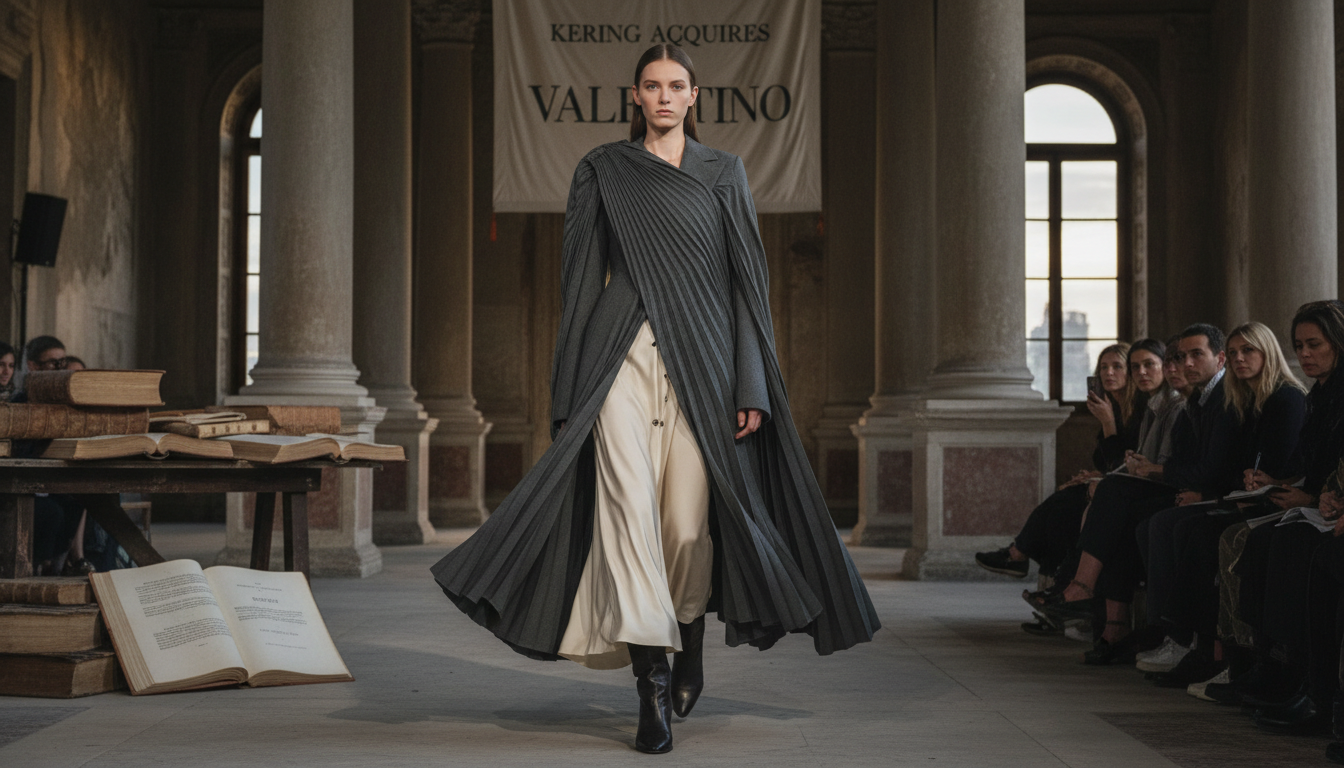
The collection, titled Interferenze, abandoned the logo-heavy maximalism of Michele’s Gucci years. Instead, it embraced what the designer called subtle complexity. Architectural tailoring met fluid draping in a way that felt both ancient and modern. One particular overcoat featured mutating pleats that cascaded from the shoulder to the hem. It suggested a house in a state of graceful transition. The garments prioritized intellectual restraint over loud branding.
Kering is currently finalizing its strategic acquisition of Valentino.
Michele used his show notes to cite Nietzsche and Walter Benjamin. He argued that the Palazzo was an apparatus for critical reactivation. This was a sharp departure from Garavani’s focus on making women look sensational. Michele is booksmaxxing while others chase trends. The tension between the brand’s DNA and Michele’s own eccentricity created a captivating friction. He is attempting to translate a beauty that is constantly changing.

Gwyneth Paltrow sat front row, signaling a pivot in her own style. She wore a lime green micro minidress with voluminous bishop sleeves. The look was paired with white floral lace tights and icy-blue heels. It was a departure from her signature quiet luxury. It reflected the collection’s 1980s-inspired palette of jewel tones and unexpected textures. Her Panthea Shoulder Bag, retailing for $3,800, grounded the experimental silhouette with classic hardware.
Satin sash belts cinched draped tunics while sheer lilac tights added a pop of color to the silhouettes.
The fabrics were heavy with history. Michele’s background in costume design was evident in the outsized cuffs and ornate silver necklaces. These pieces were built to resist the speed of high-street imitation. Lace-dipped hems on spray-on jeans provided a gritty contrast to the opulent jewelry. There was an emphasis on the tactile and the artisanal. This was a collection that demanded a close reading of every stitch and seam.
It is a masterful redirection for the storied house of Valentino.
The 1980s influence was not a caricature of the decade. It was a reflection of Michele’s mother. He described the era as a time when women gained control over their presence and their bodies. This personal touch grounded the lofty philosophical references. The collection felt intimate. It was a conversation between a son of Rome and the ghost of its most famous couturier. Beauty here was used as a form of intellectual resistance.
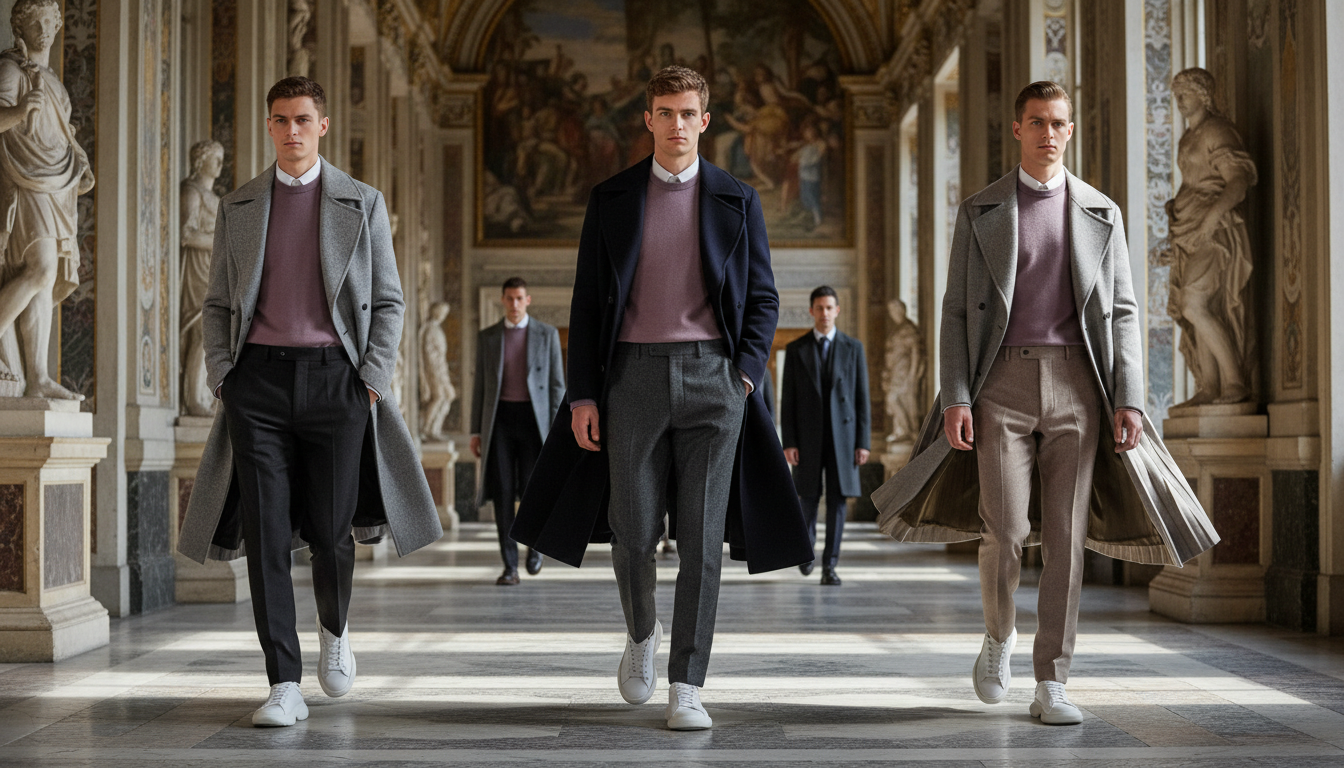
Male models navigated the historic halls in mauve crewnecks and classic trousers. The integration of sneakers with architectural coats signaled a modernization of the Valentino man. Complexity was balanced with a newfound restraint. This was not the cluttered retro eccentricity of years past. It was a refined study of torsion and curve within the walls of the Barberini. The silhouettes were clean but mutated with unexpected details.
The show successfully bridges the gap between heritage and evolution.
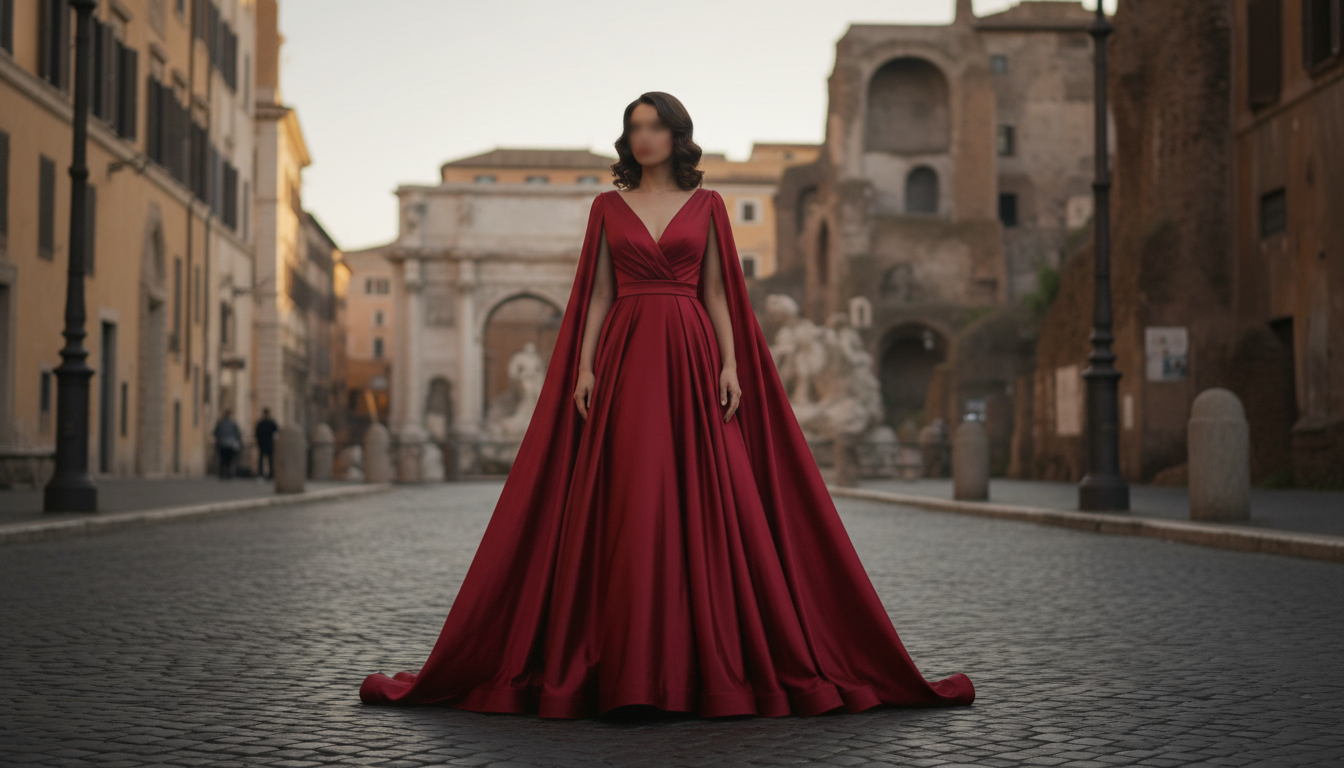
Michele spoke backstage about the difficulty of creating art during times of global conflict. He acknowledged that working in fashion is a strange pursuit when there is a war outside. Yet, he maintained that this is the only thing he can do. His commitment to beauty as a discipline was evident in the final look. A long, low-back dress in the signature Valentino red closed the show. It was a direct tribute to the man who built the house.
The red gown served as a bridge to the past. It recalled the glamour of Elizabeth Taylor and Sophia Loren. Garavani once said he simply tried to make girls look sensational. Michele has added layers of philosophical inquiry to that mission. The result is a brand that feels intellectually rigorous yet aesthetically pleasing. The Roman streets outside were a reminder of where this journey began decades ago. Valentino is now entering a chapter defined by both memory and mutation.
The market transition is just as significant as the creative one. With Kering’s involvement, the house is expected to reach new heights of commercial viability. Michele has already proven he can transform a brand’s financial fortunes. At Valentino, he is doing so with a more mature and restrained hand. The era of the logo is being replaced by the era of the silhouette. This collection proves that Valentino can survive and thrive without its founding father.
The house of Valentino has found a way to honor its history without becoming a museum.
Frequently Asked Questions
When was the Valentino Fall/Winter 2026 show held?
The show took place on March 12, 2026, at the Palazzo Barberini in Rome.
Who is the current Creative Director of Valentino?
Alessandro Michele is the Creative Director. He took over the role in 2024.
What was the theme of the Fall/Winter 2026 collection?
The collection was titled Interferenze. It focused on a dialectic between code and deviation, lightness and gravity, and architectural tailoring with intellectual restraint.
How did the collection pay tribute to Valentino Garavani?
The show was the first RTW collection since Garavani's death in January 2026. It concluded with a signature Valentino red gown as a direct homage to his legacy of beauty.
What did Gwyneth Paltrow wear to the Valentino FW26 show?
Paltrow wore a lime green micro minidress with bishop sleeves, white floral lace tights, and pale teal heels. She carried a black Panthea Shoulder Bag.
How does this collection differ from Michele's work at Gucci?
Unlike his maximalist and logo-heavy tenure at Gucci, this collection for Valentino was restrained, architectural, and prioritized subtle complexity over irony.
Why was the location of Palazzo Barberini significant?
Michele chose the site for its historical and architectural identity. He used it as an apparatus for critical reactivation rather than just a simple backdrop.
Is Valentino currently owned by Kering?
Kering is in the process of acquiring Valentino. This strategic move aims to elevate the brand to the level of peers like Dior and Saint Laurent.
Related
Articles
Readers always have access to latest trends and perspectives.





Comments: