

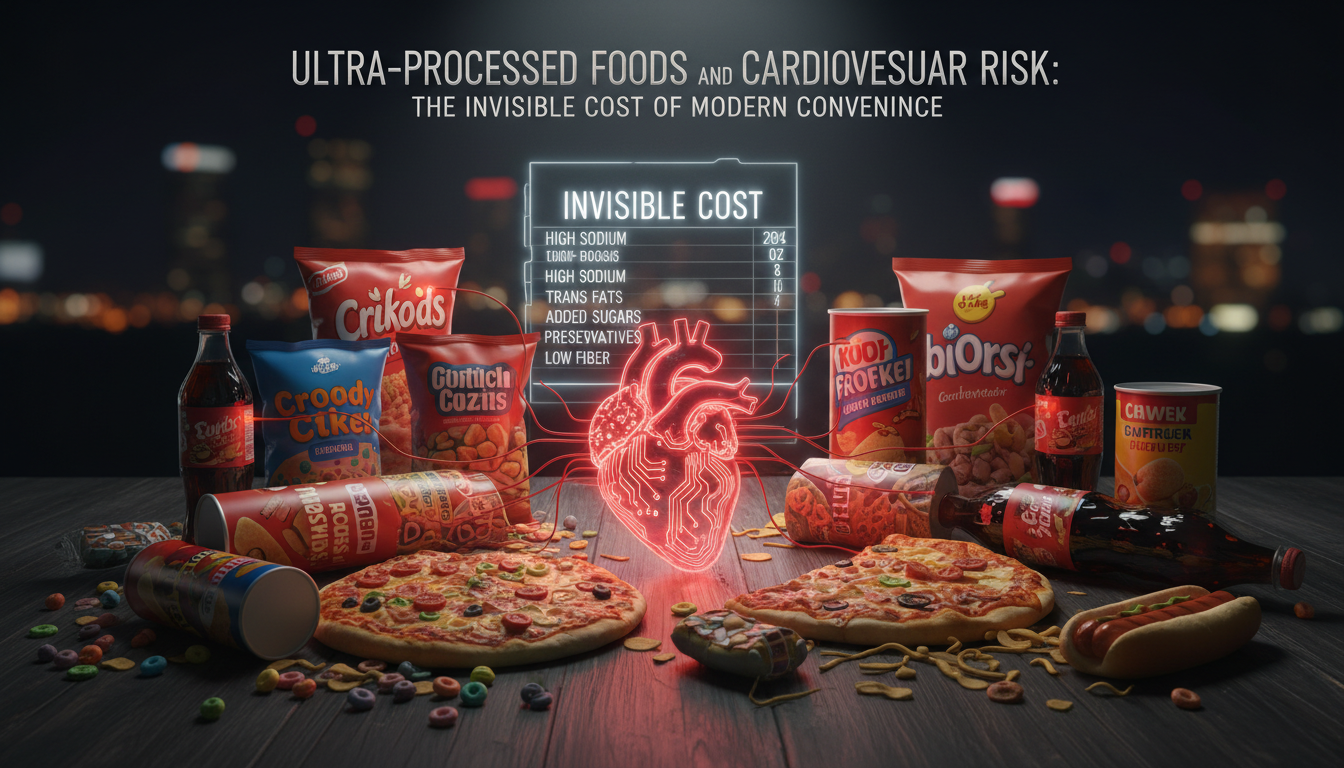
Ultra-Processed Foods and Cardiovascular Risk: The Invisible Cost of Modern Convenience


At the American College of Cardiology’s latest annual scientific session, the conversation shifted from surgical techniques to the contents of the grocery cart. Dr. Amier Haidar presented a sobering analysis of how our reliance on ultra-processed goods is reconfiguring our biological destiny. It is a study of modern consumption that reveals a darker side to the convenience we often take for granted. We are consuming products designed for shelf life rather than human life.
The research utilized data from the Multi-Ethnic Study of Atherosclerosis. It tracked over 6,800 adults between the ages of 45 and 84 over a period of twelve years.
Consuming nine servings of ultra-processed foods daily increases the risk of mortality from heart disease by 67 percent. This is not a marginal health concern. It is a systemic failure of the contemporary diet. Each additional serving adds 5 percent to that risk profile. It is a compounding interest of ill health that many participants accrued over a decade of data collection between 2000 and 2012. The figures suggest a direct correlation between industrial food processing and cardiac failure.
A single serving is often smaller than the consumer realizes.
Three cookies or fifteen potato chips can constitute a full serving. Given that an average bag of chips contains hundreds of pieces, it is incredibly easy to surpass the dangerous nine-serving threshold before lunch. The convenience of "grab-and-go" meals often disguises the reality of what we are putting into our bodies. We are essentially snacking our way toward a cardiovascular crisis.
The analysis also highlighted a disturbing disparity in health outcomes. Black Americans saw a 6.1 percent increase in risk per serving. This was significantly higher than the 3.2 percent observed in non-Black participants. Researchers suggest that socio-economic factors and limited access to fresh produce play a critical role in this structural health inequality. Environment is as much a factor as choice. It is a reminder that health is often a reflection of one's zip code.
Ultra-processed foods are defined by what they lack as much as what they contain. They are stripped of fiber and essential nutrients.
Using the NOVA classification system, these items are identified as group four. They are industrial formulations of sugar, salt, and oils. They often feature high-fructose corn syrup, hydrolyzed proteins, and additives like emulsifiers or thickeners. These are ingredients you would never find in a domestic kitchen. They are built for palatability and long-distance transport. The human body was not designed to process these chemical cocktails as its primary source of fuel.
The United Kingdom currently leads Europe in the consumption of these products. They make up nearly 57 percent of the national diet.
The distinction between processed and ultra-processed is vital. A corn on the cob is unprocessed. Canned corn is minimally processed. Corn chips are ultra-processed. This ladder of degradation shows how the core integrity of the food is lost through industrial intervention. Dr. Haidar noted that even when total calories are controlled, the risk remains. It is the nature of the food itself that is toxic. The quality of the calorie is proving to be more important than the quantity.

However, there is a path toward restoration. Researchers at Harvard Medicine suggest that the damage to the heart and gut can be reversed. It requires a committed shift toward a diet rich in fruits, vegetables, and lean proteins. Fiber is the essential architect of a healthy system. Over the course of several years, a body can heal from the inflammation caused by industrial additives. It requires a return to the kitchen and a rejection of the supermarket's middle aisles.
The market context is clear. The food industry has prioritized efficiency and taste over long-term wellness.
Convenience has become a luxury we can no longer afford to buy. The American College of Cardiology has made it evident that moderation is a survival strategy. We must treat our diet with the same discernment we apply to any other high-stakes investment. The cost of a quick snack is increasingly being paid in years of life lost. It is time to look past the packaging and consider the structural integrity of our own health.
Frequently Asked Questions
What exactly is considered an ultra-processed food?
Ultra-processed foods are industrial formulations that typically contain five or more ingredients. These often include additives not used in home cooking, such as preservatives, dyes, and flavor enhancers. Common examples include soda, packaged snacks, instant noodles, and reconstituted meat products.
How much does one extra serving of ultra-processed food increase heart risk?
According to the study presented by Dr. Amier Haidar, each additional serving of ultra-processed food per day is associated with a 5.1 percent increased risk of adverse cardiac events. For Black Americans, this risk increase is higher, reaching 6.1 percent per serving.
Can the health effects of eating ultra-processed foods be reversed?
Yes, researchers from Harvard Medicine indicate that some impacts on the heart, gut, and brain can be reversed over several years. This requires switching to a nutritious diet focused on whole foods, fiber, and lean proteins.
Why do ultra-processed foods affect Black Americans more significantly?
The study found a higher risk increase for Black Americans, which researchers attribute to a combination of socio-economic and environmental factors. Limited access to fresh, whole foods in certain communities often makes ultra-processed options the most available choice.
Is the calorie count the most important factor in these health risks?
No, the study found that the risk associated with ultra-processed food intake remained consistent regardless of the total calories consumed or the overall quality of the diet. The processing level of the food itself appears to be the primary driver of the increased risk.
What is the NOVA classification system mentioned in the study?
The NOVA system categorizes foods into four groups based on the extent of their processing. Group 1 includes unprocessed or minimally processed foods, while Group 4 encompasses ultra-processed foods that are entirely industrial in nature.
How many daily servings were linked to a 67 percent higher risk of death?
Participants who consumed an average of nine servings of ultra-processed foods per day showed a 67 percent higher risk of dying from a heart attack or stroke compared to those who consumed minimal amounts.
Related
Articles
Readers always have access to latest trends and perspectives.







Comments: