

Viral Sex Toy ‘Lem Clitoral Massager’ Is Everywhere in the US, Now Available in the UK
It looks like something you would keep in a fruit bowl. A million women, 20,000+ reviews and a growing body of published research say otherwise. Here is what it actually does, and the one piece of information almost nobody is ever given.


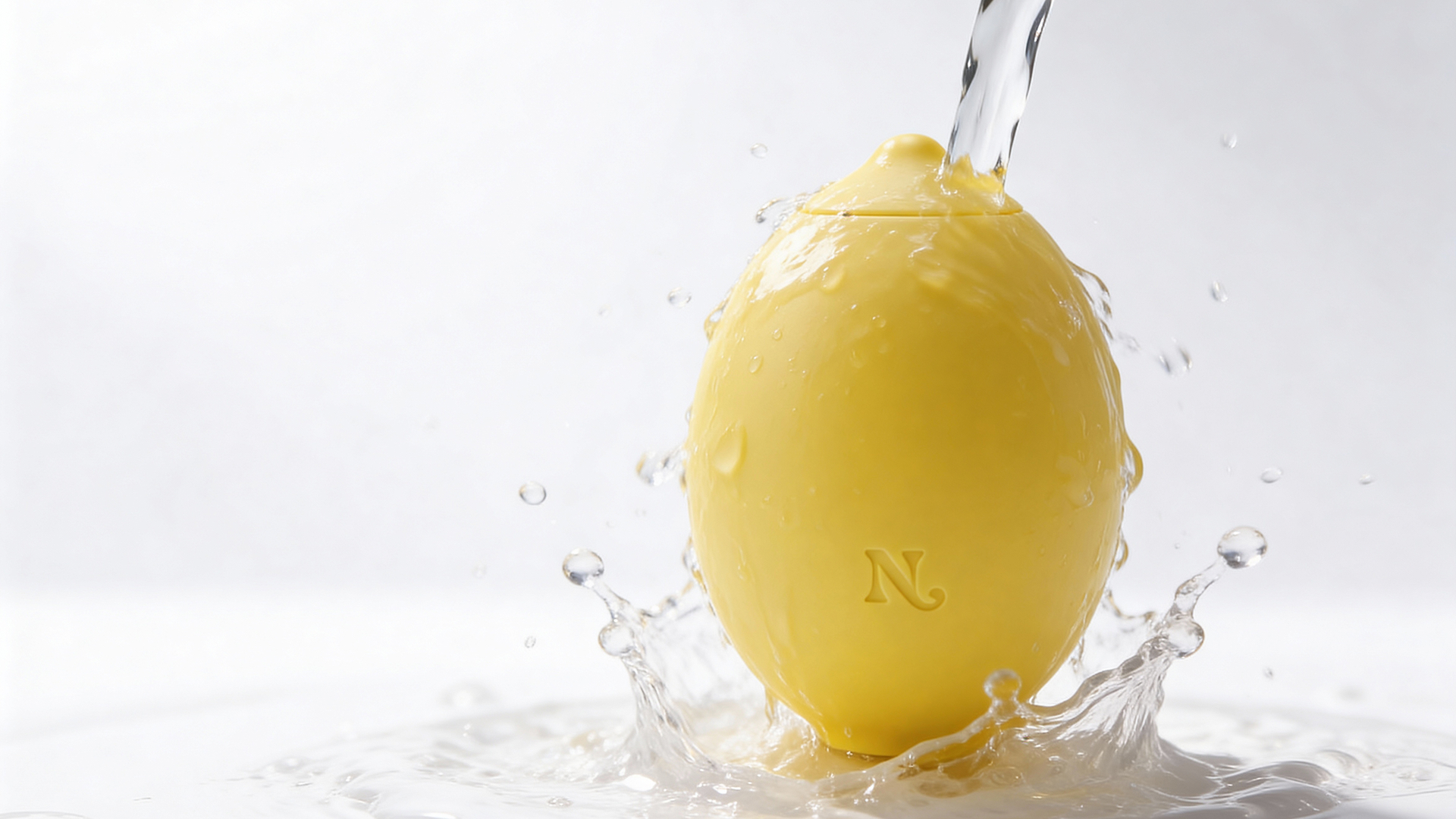
The first time most people see it, they assume it is a decoration. That is the reasonable conclusion. It is a soft matte lemon, roughly the size of a real one, with a small dimple at the top and no buttons visible from across a room.
It is a clitoral massager called Lem. More than a million American women own one. It holds 20,000+ reviews at an average of 4.8 out of five. And in most countries outside the United States, almost nobody has heard of it.
That is worth being sceptical about, because a product being popular somewhere else is not an argument for anything. Plenty of things go viral and deserve to be forgotten. So the useful question is not whether it is popular. It is whether there is a real mechanical reason behind the popularity, or whether it is simply a well-marketed lemon.
There is a reason, and it has almost nothing to do with the shape. It comes down to one distinction that most women have never had explained to them, and that distinction is useful whether or not you ever buy anything.
Why the conversation happened there and not here
Products like this do not spread evenly, because they spread by being discussed out loud.
In the United States that shift happened publicly and fairly recently. Sexual wellness moved into ordinary conversation, mainstream press covered it without euphemism, and women recommended these devices to each other the way they recommend skincare. After that, word of mouth does the work.
In a great many other countries the same conversation is quieter. Not absent, but private. The result is not less curiosity. It is less information. Women in these markets have had access to the same devices for years and many have bought one. What they have not had is anyone explaining what separates a device worth owning from a pointless one, or why two products that look nearly identical can feel nothing alike.
Suction is not vibration, and this is the part worth knowing
This applies to every product in the category and not only to Lem.
A vibrator does what its name says. It pushes rapid oscillation into the surface of the skin. It works, and for a great many women it works well. But vibration has a documented limitation: nerve endings adapt to it. Sustained exposure dulls sensation. That is why so many women find themselves moving up through the intensity settings over the years while feeling less rather than more, and then quietly conclude the problem is theirs.
Air pulse technology works on a different principle. Nothing vibrates. A small internal membrane alternates air pressure, drawing gently and releasing in a rhythm. There is no buzz because there is nothing buzzing. The comparison most people reach for is oral stimulation, and that is not a marketing line. It is a fair description of what alternating negative and positive pressure physically does.

There is an anatomical reason this lands differently. The clitoris is considerably larger than the visible part, and most of the structure sits internally, extending back beneath the surface. Surface vibration reaches the external tip. Alternating pressure engages the surrounding tissue far more broadly.
A great many women who decided they were simply not very responsive were using the wrong mechanism, not living in the wrong body.
Almost nobody is told this. It is not taught in schools. It rarely comes up with a doctor. And the products themselves advertise power and speed rather than explaining how they work, which leaves shoppers comparing numbers that do not mean anything.
Lem: £79 £139
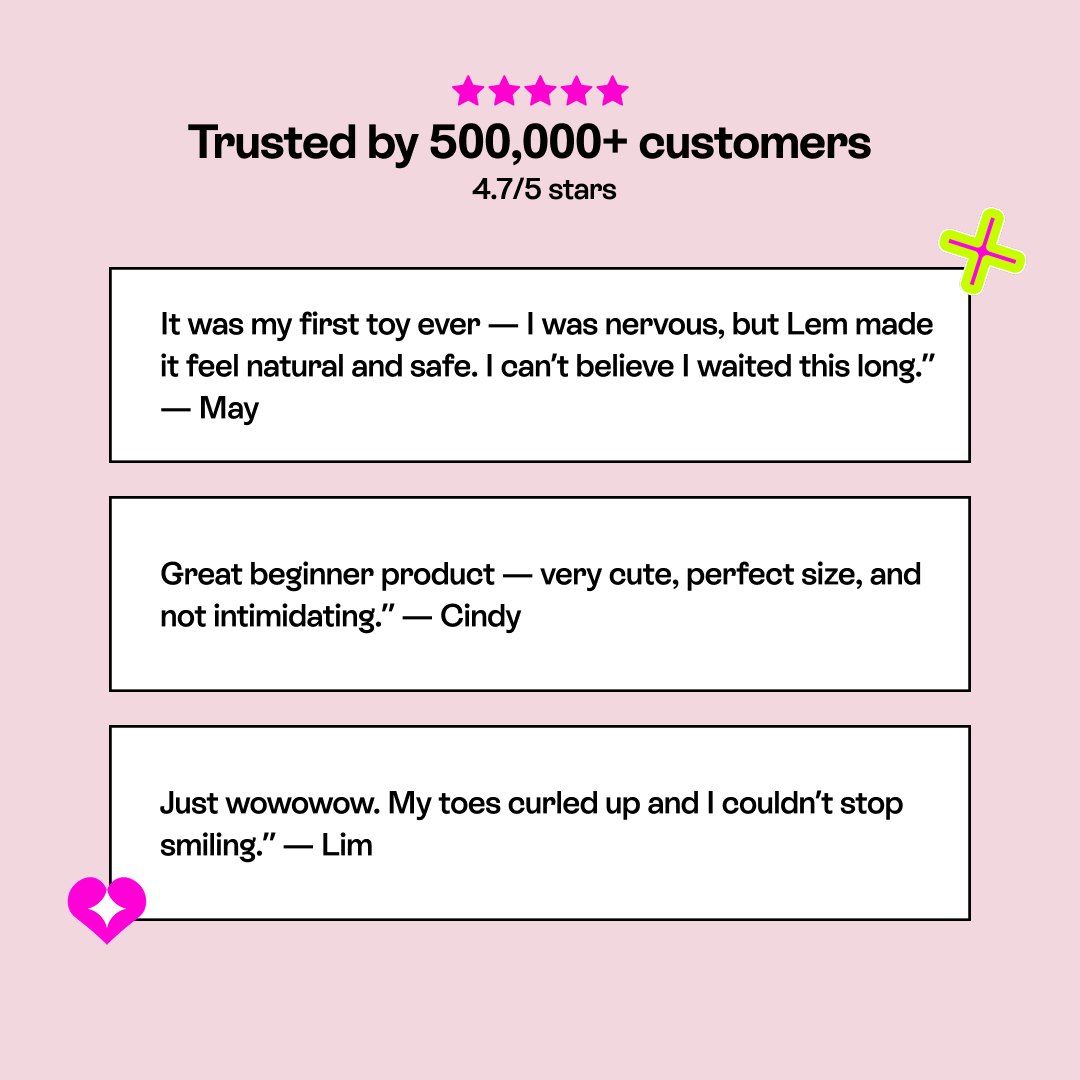
Rated 4.8 out of five across 20,000+ reviews.
Four things most people get wrong
Because the subject is rarely discussed openly, misconceptions go uncorrected for years. These four come up constantly.
- That stronger is better. It is usually the opposite. The most common complaint about cheap devices is that the lowest setting is already too intense, which makes the whole thing unusable rather than exciting.
- That these devices are for people without partners. A substantial share of owners are in long-term relationships, and many use them with a partner rather than instead of one.
- That they reduce sensitivity over time. That concern comes from vibration, where adaptation is real. Pressure-based stimulation does not work the same way.
- That the shape is a gimmick. A device that reads as an ornament stays within reach instead of migrating to the back of a drawer. That sounds trivial. In practice it is the difference between something used weekly and something used twice.
What researchers actually say
This is where the subject becomes more serious than a viral trend usually deserves.
External clitoral stimulation has moved out of the wellness margins and into peer-reviewed literature. A 2025 international consensus statement on women’s sexual wellness, written by eight specialists across seven countries, addressed self-stimulation devices directly and treated them as a legitimate part of a practical wellness toolkit. A 2023 systematic review by Dubinskaya and colleagues, drawing on seventeen studies, found a meaningful role for these devices in pelvic floor wellness. And a meta-analysis by Chivers and colleagues, covering 132 studies, found that women’s physical arousal is largely automatic rather than something that has to be consciously summoned. That last finding quietly dismantles a great deal of unnecessary self-blame.

Nancy, the brand behind Lem, worked with Dr. Angela Wright, a GP, clinical sexologist and registered menopause specialist, to compile the bibliography behind these claims. Six peer-reviewed papers sit behind it, published in full rather than summarised selectively, which is rare enough in this category to be worth noting.
One clarification, because it genuinely matters. This research concerns the broad category of external clitoral stimulation, not any single product. Lem is a wellness device. It is not FDA-cleared as a treatment for any clinical condition, and nothing here is medical advice. If you have a specific health concern, that conversation belongs with a healthcare provider who knows your history.
So why this one in particular
Air pulse technology is not exclusive to Lem, and several brands make capable devices. The fair question is why this became the one people talk about. The answer is unglamorous. It removed the small frictions that stop people using what they already own.
- Twelve settings. Eight intensity levels that start genuinely gentle, plus four rhythmic wave patterns. The usable range matters far more than the maximum.
- Quiet enough to leave out. Not quiet for a device like this. Quiet enough that owners describe leaving it in plain sight.
- Medical-grade silicone, which feels immediately different from the faintly tacky finish of cheaper devices.
- Fully waterproof, rather than splash-resistant with an asterisk.
- USB-C and magnetic charging, so there is no proprietary cable to lose.
None of that is revolutionary on its own. Together it produces a device people keep using, which is the only measure that matters. Most of this category is bought once and abandoned.
How it compares to the obvious alternative
The most common alternative is the Satisfyer Pro 2, and it deserves a fair hearing rather than a dismissal.
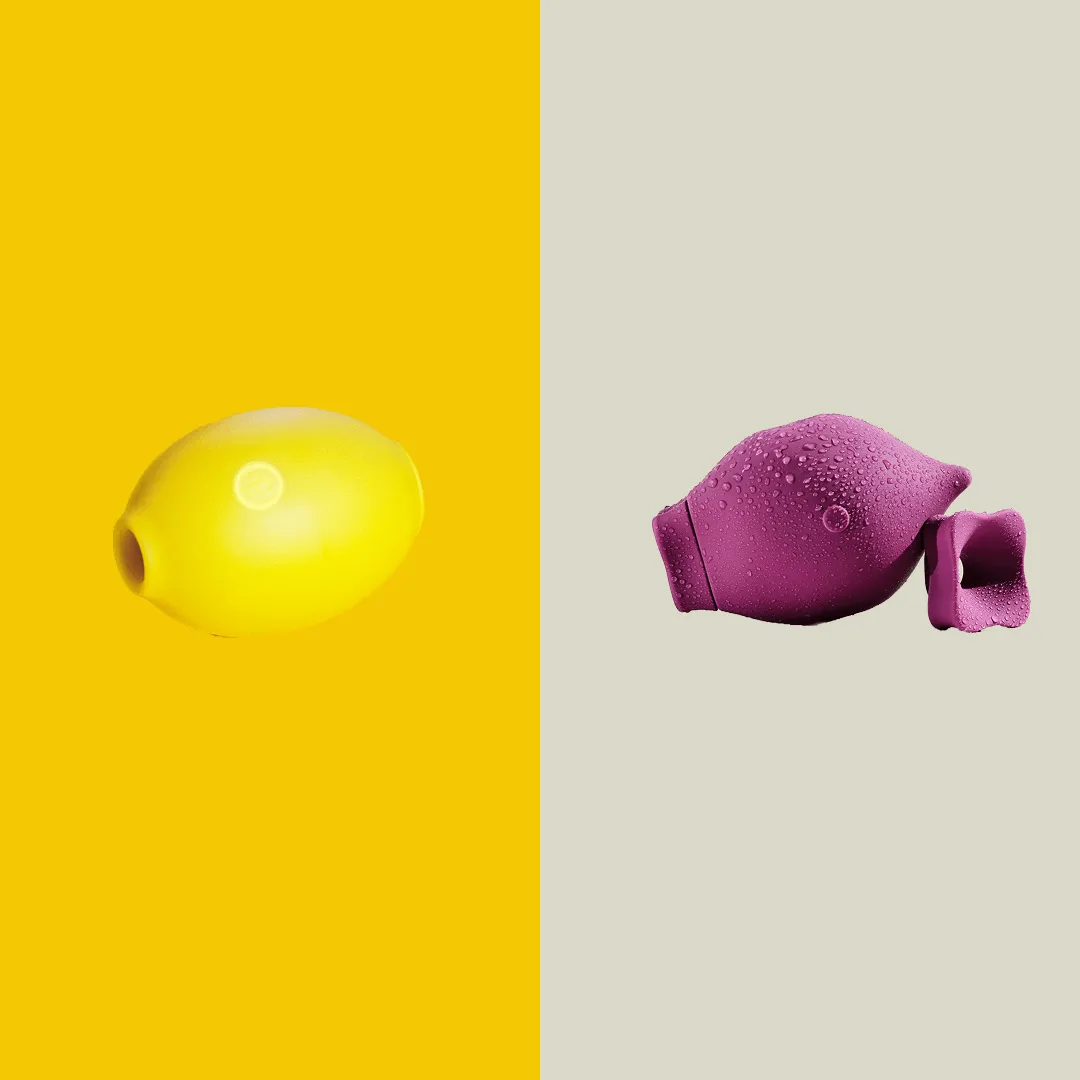
Where the Satisfyer wins. It is cheaper, at around £68 from the brand directly and frequently less through retailers. It ships with two interchangeable heads, so there is a choice of fit, which matters more than people expect because the entire mechanism depends on getting a seal. It offers a second sensation mode alongside classic suction. And it has a handle, which is easier when using it with a partner.
Where Lem wins. A seamless handle-free shell in medical-grade silicone, which is easier to hold for solo use and does not read as a device when it is sitting out. Twelve settings across intensities and patterns. Full waterproofing, and USB-C charging.
If budget is the deciding factor, the honest answer is that the Satisfyer is a capable device and costs less. Lem is the better object, and the reason that matters is not luxury. It is that people keep using it.
The part nobody puts in the specifications
The most frequently cited reason owners give for using it regularly has nothing to do with the mechanism. It is that the thing does not announce itself.

A device that looks like an ornament sits on a shelf. A device that looks like a device goes into a drawer, then into a box, then out of use. That is the whole of it, and it is the difference between owning something and using something.
Lem: £79 £139
The honest drawbacks
An article that only praises something is not worth your time, so here are the real limitations.
- It is not the cheap option. At £79 it sits well above novelty devices, though comfortably below luxury brands offering a narrower range.
- It is external only. This is a clitoral device by design and makes no attempt at penetration. If that is what you want, this is the wrong product.
- There is no choice of head size. One opening, sized for average anatomy. Cheaper competitors that ship two heads genuinely beat it here.
- It will not suit everyone. Some women simply prefer vibration, and preference is not something a specification sheet gets to overrule.
- Counterfeits are widespread, particularly on the large marketplace sites. They copy the shell and not the mechanism, and they are the source of nearly every genuinely poor review you will find. If you buy one, buy it from Nancy’s official site.
If you do try one
Four practical notes, because most underwhelming first experiences come down to method rather than the device. These apply to any air pulse product.
- Start on the lowest setting, even if you expect to want more. The sensation is unlike vibration, and jumping straight to level six tends to overwhelm rather than impress.
- Use a water-based lubricant. It improves the seal, which is what the entire mechanism depends on. This single detail changes the experience more than any setting does. Avoid oil and silicone-based products, which degrade the silicone over time.
- Give it more than one go. Almost every enthusiastic review describes the second or third session as the point where it clicked.
- Explore the patterns, not just the levels. Intensity only makes things stronger. The wave patterns feel qualitatively different, and most people find a favourite they would never have reached by simply turning it up.
The bottom line
The useful takeaway is not that a lemon-shaped device became popular in America. It is that a mechanism most people have never had explained to them works differently from the one they already know, and that published research now supports taking it seriously.
Who it is not for: anyone who wants penetration, anyone who already knows they prefer vibration, and anyone for whom the lowest price is the deciding factor. Those are real answers and the wrong product is worse than no product.
Who it is for: anyone who has tried a vibrator, found it fine rather than remarkable, and concluded the fault was theirs. On the evidence, that conclusion was probably wrong, and the difference is mechanical rather than personal.
Lem: £79 £139
- Free discreet delivery
- Plain packaging and private billing
- 30-day satisfaction guarantee
- 12-month warranty
- Rated 4.8 out of five across 20,000+ reviews
Learn more about Lem, £79 from £139 >>
Lem is a wellness device. It is not FDA-cleared as a treatment for any specific clinical condition. The research referenced in this article describes the broader category of external clitoral stimulation and is presented for informational purposes only. Please speak with a qualified healthcare provider about your individual circumstances.
Related
Articles
Readers always have access to latest trends and perspectives.





Comments: