

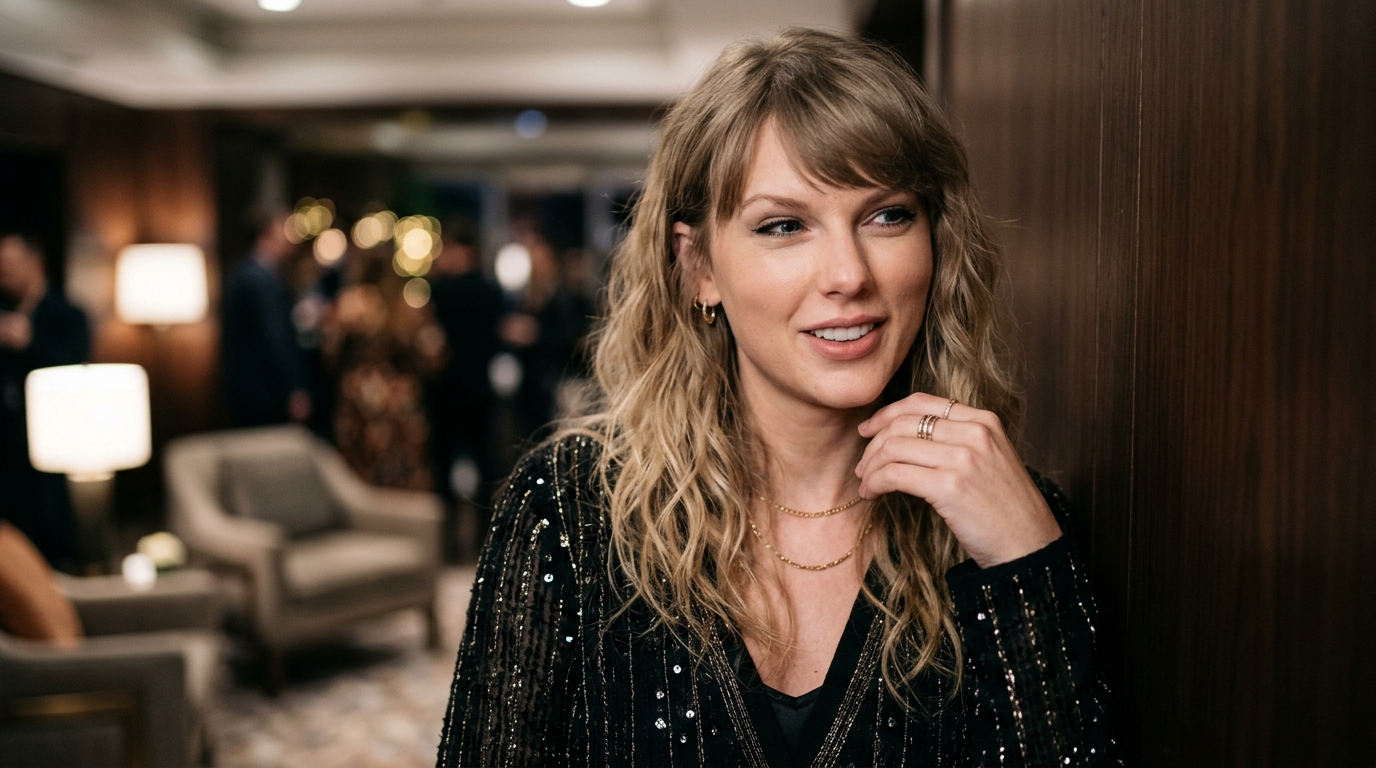
Taylor Swift's Voice and Likeness Trademarks: The Architecture of Identity Control


The modern pop icon is no longer just a musician. She is a sprawling corporate entity requiring meticulous defense mechanisms. Taylor Swift's April 2026 trademark applications for her voice and likeness represent a fascinating shift in this legal defense.
The filings arrived on April 24 through TAS Rights Management.
Generative artificial intelligence has fundamentally altered the landscape of intellectual property. Swift is directly confronting an era where digital counterfeits threaten the authenticity of public figures. Her legal team submitted three distinct applications to the United States Patent and Trademark Office. Two of these applications target something highly elusive to protect.
They aim to trademark the precise sound of her spoken voice.
One sound mark secures her saying a promotional phrase for her new album. The phrase invites listeners to stream The Life of a Showgirl on Amazon Music Unlimited. Another secures a lower register promotion for Spotify.
Protecting sound as a trademark is rare but not entirely unprecedented.
NBC’s chimes and the Netflix opening tone successfully utilized this legal strategy. Attempting to lock down a celebrity spoken voice ventures into entirely untested waters. Historically, singers leaned on copyright law to shield their recorded music from theft. AI now generates fresh content that mimics an artist without ever copying an existing audio file.
Trademark law offers a much broader shield against this new technology. It prohibits anything confusingly similar to the registered asset. By locking down specific audio phrases, Swift gains the leverage to sue platforms hosting AI imitations.
The legal strategy extends far beyond mere vocal protection.
The third application focuses on a highly specific visual aesthetic. The filing describes a photograph of Swift standing on a pink stage with a multi-colored microphone and purple lights. She holds a pink guitar with a black strap. The sartorial details are equally explicit. The trademark specifically notes a multi-colored iridescent bodysuit paired with silver boots.
This particular visual combination is instantly recognizable to her audience. Fashion has long served as a visual shorthand for Swift. Now it serves as a legally binding perimeter around her image.
This aggressive legal maneuvering was not born in a total vacuum.
The superstar has endured numerous unauthorized deepfakes over the past few years. Malicious actors have generated sexually explicit digital forgeries that spread rapidly across social media. Former President Donald Trump even shared manipulated imagery falsely suggesting she endorsed his political campaign. The existing right of publicity laws offer only fragmented relief.
Trademark infringement cases can be filed in federal court. This provides a unified national deterrent against unauthorized replication. Swift is following a path recently carved by another prominent Hollywood figure.
Actor Matthew McConaughey executed a similar playbook in early 2025.
McConaughey secured eight trademarks encompassing his likeness and voice. He notably locked down his famous catchphrase from Dazed and Confused to prevent AI misappropriation. His team argued that actors need absolute control and consent over their digital presence. Intellectual property attorney Josh Gerben noted that these filings are testing brilliant new legal theories.

Swift is no stranger to the patent office. Her legal team previously secured rights to lyrical phrases like This sick beat. She even trademarked Female Rage The Musical in 2024 to protect an Eras tour segment.
These new applications push those boundaries quite a bit further.
The implications for the broader entertainment industry are massive. A successful federal trademark for a specific vocal tone could alter how talent agencies negotiate AI rights. Creators currently face a digital landscape where anyone can train a model on their life's work. Federal courts will inevitably need to stress test these novel applications in a high profile trial.
Until that inevitable lawsuit arrives, the filings serve as a stark warning. The era of unchecked digital imitation is facing serious corporate resistance. An artist's voice and signature style are their most valuable commercial assets.
Swift is ensuring her identity remains entirely her own property.
Frequently Asked Questions
Why did Taylor Swift file new trademark applications?
Taylor Swift filed three new trademark applications on April 24, 2026, to protect her spoken voice and specific visual likeness. The filings aim to provide a federal legal shield against the unauthorized use of generative AI and digital deepfakes.
What exactly is Taylor Swift trying to trademark?
She is seeking sound marks for audio clips of her speaking promotional phrases for her album The Life of a Showgirl. She is also seeking a visual trademark for an image of herself wearing a multi-colored iridescent bodysuit and silver boots while holding a pink guitar.
How does trademark law differ from copyright for musicians?
Copyright law protects recorded music and original compositions from direct theft. Trademark law prohibits the creation of new content that is confusingly similar to a registered asset, offering broader protection against AI voice cloning.
Has any other celebrity trademarked their voice?
Yes. Actor Matthew McConaughey successfully secured trademarks for his voice and likeness in 2025. His filings included audio of his famous catchphrase from the film Dazed and Confused to prevent AI misappropriation.
What company filed the Taylor Swift trademarks?
The applications were filed by TAS Rights Management. This is the official intellectual property holding company that manages Swift's expansive trademark portfolio.
Why are celebrities worried about AI deepfakes?
Generative AI allows users to create highly realistic audio and video without an artist's consent. Swift has previously been the target of sexually explicit deepfakes and manipulated images falsely implying political endorsements.
Related
Articles
Readers always have access to latest trends and perspectives.







Comments: