


Prada’s Axiom Spacesuit Inner Layer: The Architecture of Lunar Tailoring


The atmosphere inside Prada’s Manhattan flagship on Sunday was far removed from a typical fashion week presentation. Prada and Axiom Space officially unveiled the new spacesuit inner layer NASA astronauts will wear to the Moon. This highly anticipated hardware is formally known as the Liquid Cooling and Ventilation Garment. The focus has entirely shifted to the lunar surface.
It represents a critical shift in aerospace manufacturing. Luxury houses are now entering the industrial supply chain.
The Italian label’s involvement is not merely aesthetic posturing or a clever marketing stunt. The collaboration relies heavily on Prada’s extensive knowledge of engineered knitting and advanced 3-D modeling. The suit acts as the innermost layer of the Axiom Extravehicular Mobility Unit. It is responsible for regulating the extreme metabolic heat generated by the human body during a spacewalk.
Every single stitch of this new garment is dictated by pure function.
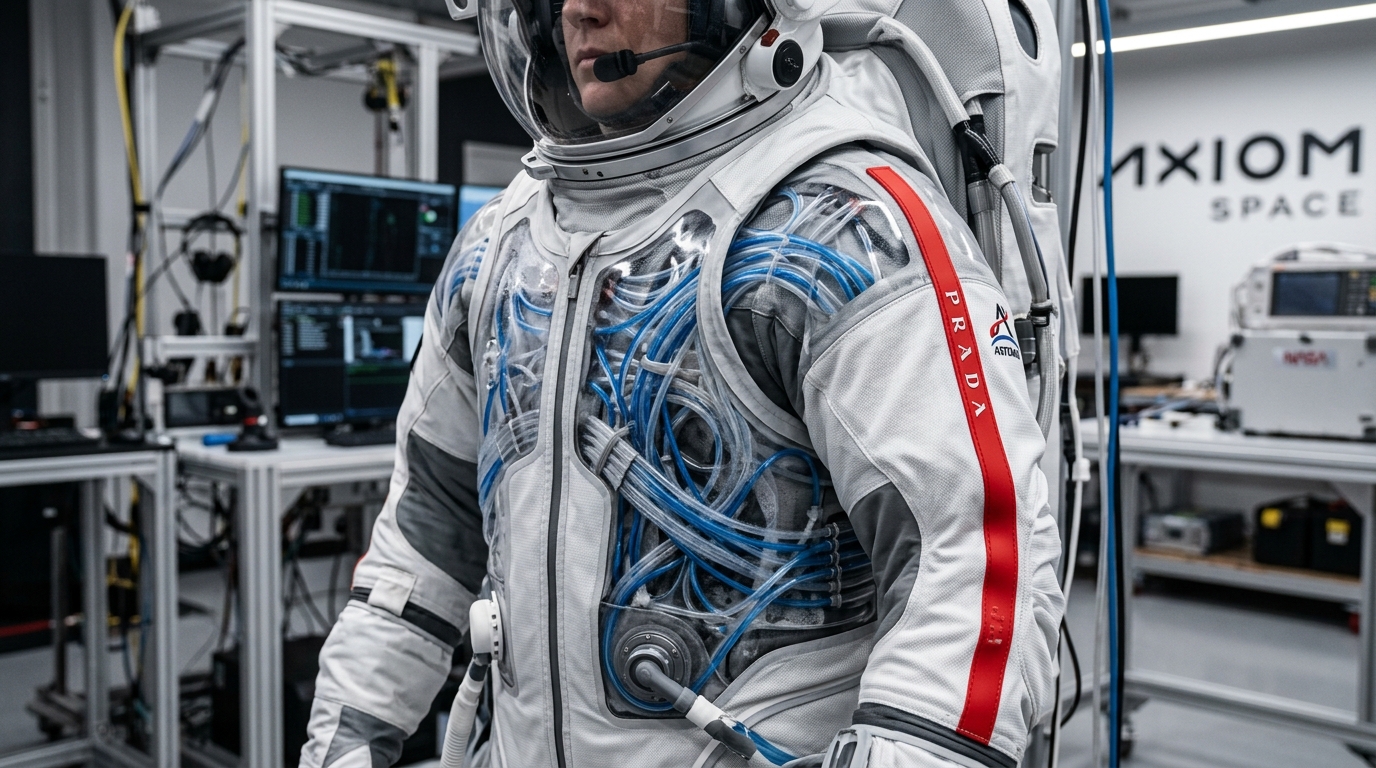
Miles of intricate tubing weave through the specialized fibers. Cold water constantly circulates across the major muscle groups to prevent overheating. Ventilation tubes deliver oxygen and actively wash away exhaled carbon dioxide.
Visually, the piece is remarkably streamlined. A single pop of Prada’s signature Linea Rossa red stripe runs down one sleeve as a quiet nod to its makers.
This venture aligns perfectly with the current trajectory of the commercial space industry. Axiom Space CEO Jonathan Cirtain emphasized the necessity of cross-industry thinking at the unveiling. Prada controls a massive vertically integrated supply chain. They handle everything from raw material sourcing to final production. This allows for bespoke, tailor-made suits for individual astronauts on the Artemis 4 mission.
Tailoring is no longer just a luxury. It is a strict necessity for human survival.
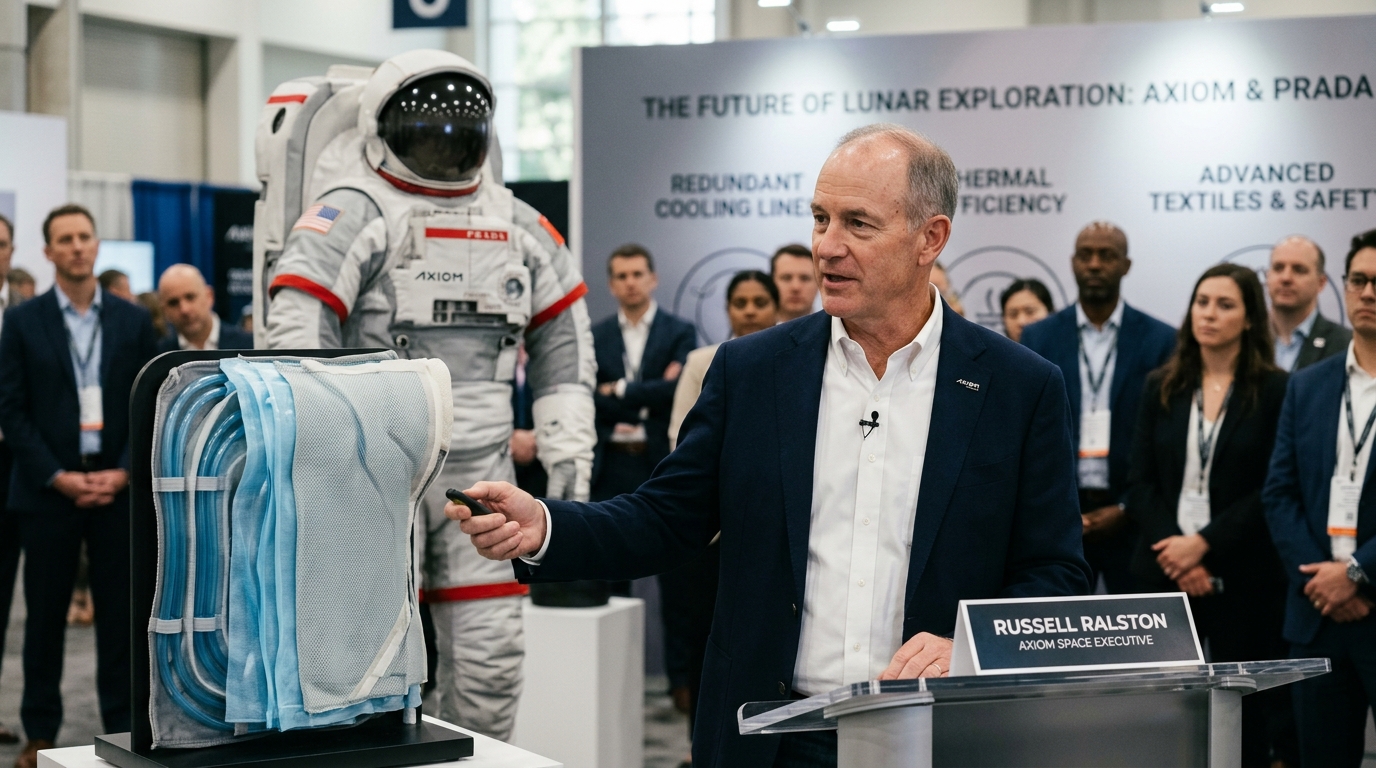
Axiom executive Russell Ralston noted that comfortable inner layers enhance overall safety. Current models used on the International Space Station can be cumbersome. Prada’s iteration utilizes redundant cooling lines to improve thermal efficiency.
The advanced textile choices also mitigate electrical charging risks posed by the volatile plasma environment of the Moon.
Market analysts view this partnership as a calculated business maneuver. Thomai Serdari of New York University highlighted the dual benefits for Prada. The brand gains access to an ultra-affluent demographic interested in space tourism. It also aligns the historic Italian marque with avant-garde technological advancement. Prada is positioning itself at the frontier of industrial design.
The first true orbital test is currently scheduled for next year.
Axiom hopes to demonstrate the prototype suit in the microgravity of the International Space Station. Ground testing of the raw materials and liquid cooling architecture has already been completed.
A qualification suit will be delivered to NASA by the end of the year. The agency requires strict compliance with all safety parameters.

The timeline remains tight for the Artemis 4 lunar landing in 2028. A recent report from NASA’s Office of Inspector General warned of potential delays regarding spacesuit development. Axiom leadership firmly dismissed these concerns during the New York presentation. They maintain that the suit will be ready for the first crewed mission to the lunar South Pole in over fifty years. Spaceflight demands precision.
Lorenzo Bertelli expressed immense pride in the unique combination of fashion and science.
The merging of aerospace engineering and luxury craftsmanship is unprecedented. Neither company could have achieved this specific result independently. Prada provided the soft goods expertise that traditional contractors often lack.
Outer space is an unforgiving environment. It requires materials that can withstand absolute thermal extremes.
The Liquid Cooling and Ventilation Garment sits at the core of this complex protective system. It is the barrier between the fragile human body and the void. Prada has elevated a highly technical piece of equipment into a masterclass of functional design. The fashion industry is watching closely as one of its heritage brands looks toward the stars for future market dominance.
The space race has officially become a matter of high-performance tailoring.
Frequently Asked Questions
What is the Prada spacesuit inner layer called?
The garment is officially known as the Liquid Cooling and Ventilation Garment. It serves as the base layer for the Axiom Extravehicular Mobility Unit.
Why did NASA and Axiom Space partner with Prada?
Axiom Space selected Prada for its vertical integration and expertise in soft goods manufacturing. The fashion house possesses advanced knowledge in engineered knitting and sourcing high-performance fibers.
How does the Prada spacesuit keep astronauts cool?
The suit features an integrated network of tubes that circulate cold water across major muscle groups. This design absorbs metabolic heat and carries it to the suit’s portable life support system.
Will the Prada spacesuit be used on the Artemis 3 mission?
The suit will undergo orbital testing during the Artemis 3 timeline in 2027 or aboard the International Space Station. However, the fully qualified suit is expected to be worn on the lunar surface during the Artemis 4 mission in 2028.
Does the new spacesuit feature any Prada branding?
Yes. The inner cooling garment includes Prada’s signature Linea Rossa red stripe running down one sleeve. This subtle detail acknowledges the brand's contribution to the complex engineering process.
How is the Axiom spacesuit different from current NASA suits?
The new design utilizes redundant cooling lines and specialized materials to prevent electrical charging from lunar plasma. It also offers a custom-tailored fit for individual astronauts to improve mobility and comfort.
Related
Articles
Readers always have access to latest trends and perspectives.









Comments: