


Positive Mental Health Consensus Study: The Architecture of an Uncluttered Mind


The Positive Mental Health Consensus Study has finally arrived to strip away the wellness industry's velvet ropes. Published recently in Nature Mental Health, this landmark research delivers a sobering dose of absolute clarity.
For decades, the concept of mental wellbeing was a nebulous catch-all. It meant everything and nothing.
A team led by Adelaide University and Be Well Co surveyed 122 global experts across eleven diverse disciplines. They sought to define what it actually means to be well. The researchers achieved a near-unanimous agreement on six essential factors. Happiness is merely one piece of a complex puzzle. True wellness requires a sophisticated combination of how we feel, function, and connect.
True positive mental health is not about maintaining a perpetual state of joy.
Dr. Matthew Iasiello notes that positive mental health requires the capacity to navigate hardship. You can experience robust mental wellbeing even while living with a diagnosed clinical condition.
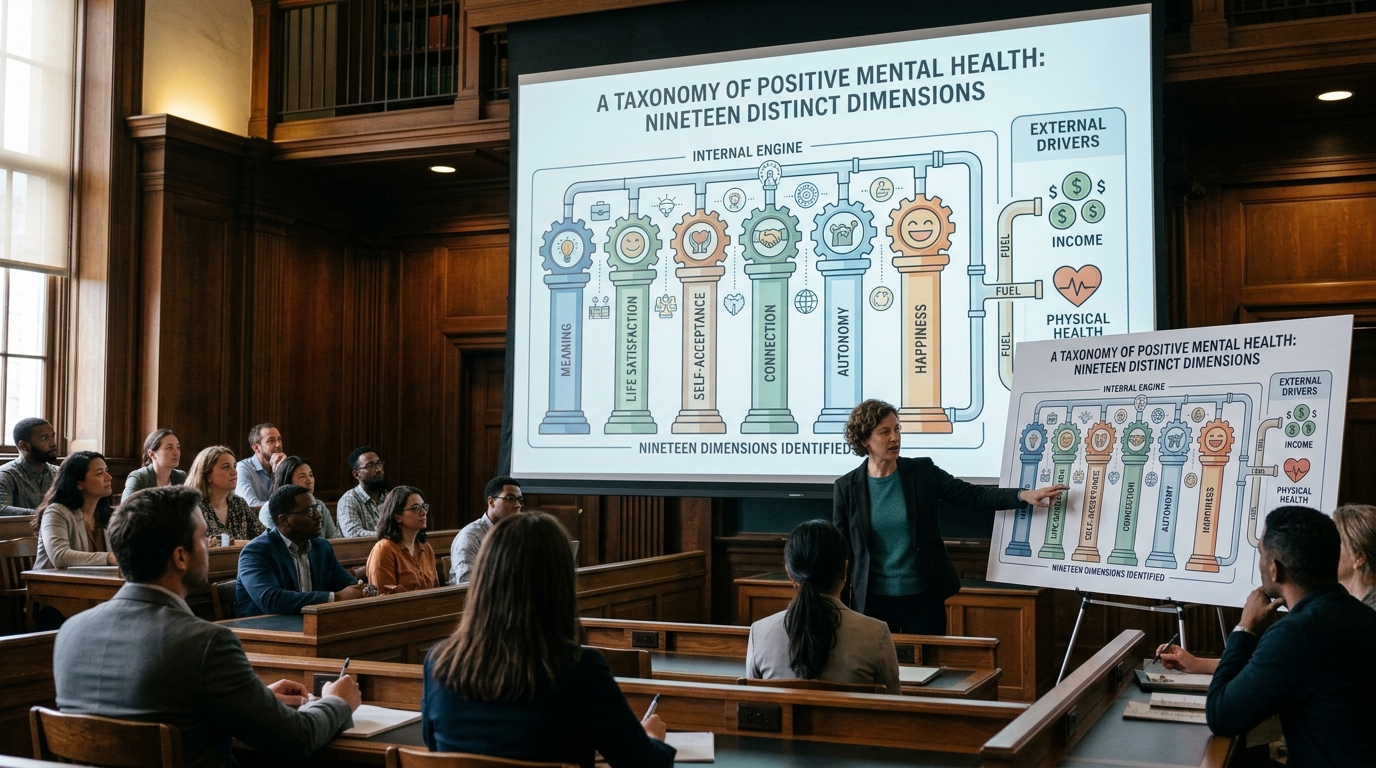
The taxonomy confirms nineteen distinct dimensions of positive mental health. The dominant pillars include meaning, life satisfaction, self-acceptance, connection, autonomy, and happiness. This framework separates the core psychological engine from external drivers like income or physical health. The latter are merely the fuel that keeps the internal machinery running smoothly.
Financial security and physical fitness do not inherently define your psychological state.
Mid-century psychologist Erich Fromm argued that normal people are often sicker than the neurotic. They hide behind a managed illusion of wellness. The new consensus rejects this superficial facade entirely. It demands genuine emotional agility.

Emotional numbness often masquerades as resilience in modern society. Fromm believed that a healthy individual must experience the full spectrum of emotions. This includes the capacity to feel sharp pain when harmed and profound joy when triumphant. The new global consensus echoes this mid-century wisdom. It frames wellbeing as a resilient psychological functioning rather than a hollow state of permanent, unbothered bliss.
The ability to sit comfortably in absolute solitude is a vital metric.
Dr. Joep van Agteren emphasizes the practical applications of this blueprint. Workplaces and government organizations can finally abandon vague wellness initiatives. They can target specific gaps.
Corporate programs previously equated a free yoga class with employee care. Now, institutions have a scientifically agreed blueprint. They must foster deep social connection and cultivate employee autonomy. Associate Professor Dan Fassnacht correctly observes that you cannot build what you cannot define. This structured taxonomy changes everything.
The exhausting era of ambiguous corporate wellness retreats is officially drawing to a necessary close.

This research elevates mental health from a subjective feeling to a measurable architecture. Individuals can now pinpoint exactly which pillars of their psychological foundation are structurally sound. They can also identify which areas require targeted repair.
Understanding what constitutes positive mental wellbeing allows organizations to focus their resources on interventions that actually matter. Whether it is a government department creating spaces for community connection or a school fostering autonomy in children, the path forward is clear. We finally have an internationally recognized standard for the intricate craft of living well.
Psychological clarity is perhaps the ultimate modern luxury.
A closer examination of the methodology reveals the sheer scale of this endeavor. The Delphi consensus method required three iterative rounds of rigorous scrutiny. The experts evaluated twenty-six initial dimensions before arriving at the final list.
The rigorous selection process ensures that subjective cultural biases are stripped away. The researchers consulted professionals from fields as disparate as theology and public health. This multidisciplinary approach ensures the taxonomy is not trapped in a purely clinical vacuum. It acknowledges that human flourishing is a complex tapestry woven from spiritual, societal, and economic threads.
The resulting taxonomy is remarkably unpretentious and universally applicable.

Consider the concept of self-acceptance. It transcends the shallow affirmations often sold on social media. True self-acceptance requires an honest audit of your own limitations and flaws. It demands radical accountability and grace.
Many individuals retreat into isolation when faced with the overwhelming demands of modern life. The study highlights connection as a non-negotiable pillar of wellness. Having close interpersonal ties does more than bolster your self-esteem. It fundamentally alters your biological reality and provides a crucial buffer against the inevitable frictions of existence.
We are inherently and relentlessly interdependent creatures.
The illusion of total independence is a modern fallacy. Eradicating all vulnerability would result in a sterile and profoundly unsatisfying life. The friction of human interaction is where genuine meaning is forged.
When we are unwell, we often lose our curiosity about the outside world. Life begins to feel flat and burdensome. This retreat inward is a natural protective mechanism against further psychological harm. The restoration of mental health occurs when we cultivate enough inner resilience to look outward once again. We must engage with the fascinating complexities of other people without the fear of losing our own identity.
A truly healthy mind interacts dynamically and fearlessly with its surrounding environment.
This definitive blueprint strips the mental health conversation of its mystical aura. It replaces vague aspirations with concrete architectural plans. You can now approach your psychological wellbeing with the same precision as a tailored garment.
Frequently Asked Questions
What are the 19 dimensions of positive mental health?
The recent consensus study identified nineteen distinct dimensions that define psychological wellbeing. The six most dominant pillars include meaning, life satisfaction, self-acceptance, connection, autonomy, and happiness.
Can you have good mental wellbeing with a mental illness?
Yes. The study confirms that positive mental health is entirely separate from mental illness. Individuals can experience robust mental wellbeing and live meaningful lives even while managing a clinical diagnosis.
Why is happiness not the only measure of mental wellbeing?
Happiness is merely one component of a much larger psychological framework. True positive mental health involves a complex combination of how you feel, function, and connect with others. It is about navigating hardship rather than maintaining perpetual joy.
How does income affect positive mental health?
The researchers categorized financial income and housing as external drivers rather than internal states of wellbeing. They act as fuel to help your psychological engine run. They do not constitute the mental state itself.
How will the Delphi consensus study impact corporate wellness programs?
Organizations can now move past superficial offerings like free yoga classes. They have a scientifically backed blueprint to target specific psychological gaps. Workplaces can focus on fostering deep social connection and increasing employee autonomy.
Related
Articles
Readers always have access to latest trends and perspectives.









Comments: