

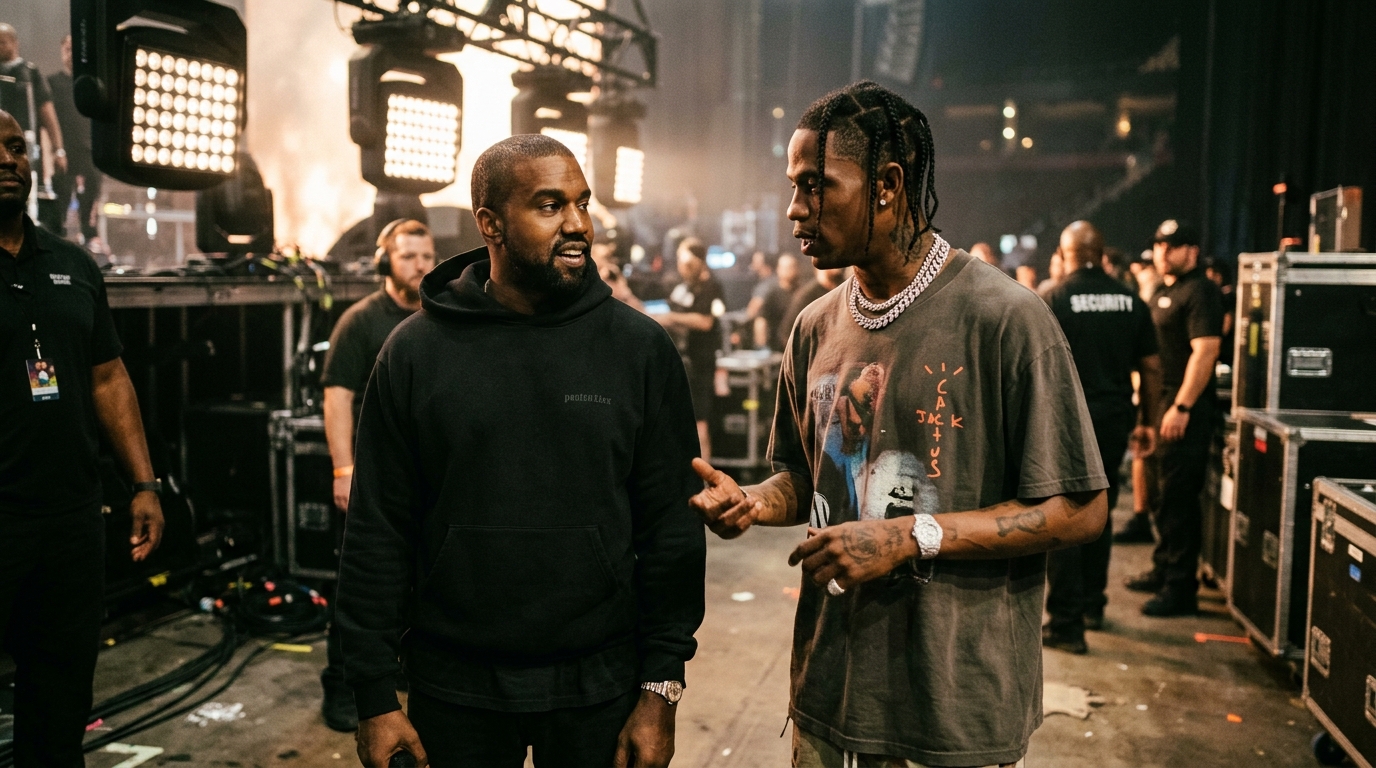
Kanye West and Travis Scott Italy Concert Ban: The Architecture of a Cultural Shutout


The anticipated Kanye West and Travis Scott summer performances have met a definitive wall in Northern Italy. Reggio Emilia prefect Salvatore Angieri issued a formal cancellation for both shows scheduled for July. The consecutive events were expected to draw monumental crowds to the RCF Arena. Italian authorities prioritized public order over cultural spectacle.
These back-to-back performances were initially slated for July 17 and 18. The venue boasts a massive capacity of 103,000.
West was poised to headline the Pulse of Gaia festival. Scott was booked for the Hellwatt festival the day prior. The close proximity of these mammoth events triggered immediate logistical alarms for local governance. Angieri cited the concrete risk of counter-demonstrations alongside the sheer volume of attendees expected to flood the region within a tight twenty-four hour window.
The cancellation stems from much deeper ideological fractures.
Local Jewish communities and anti-fascist groups mounted substantial pressure. West has faced severe global backlash for a string of antisemitic actions. This includes his 2025 track Heil Hitler and swastika merchandise.
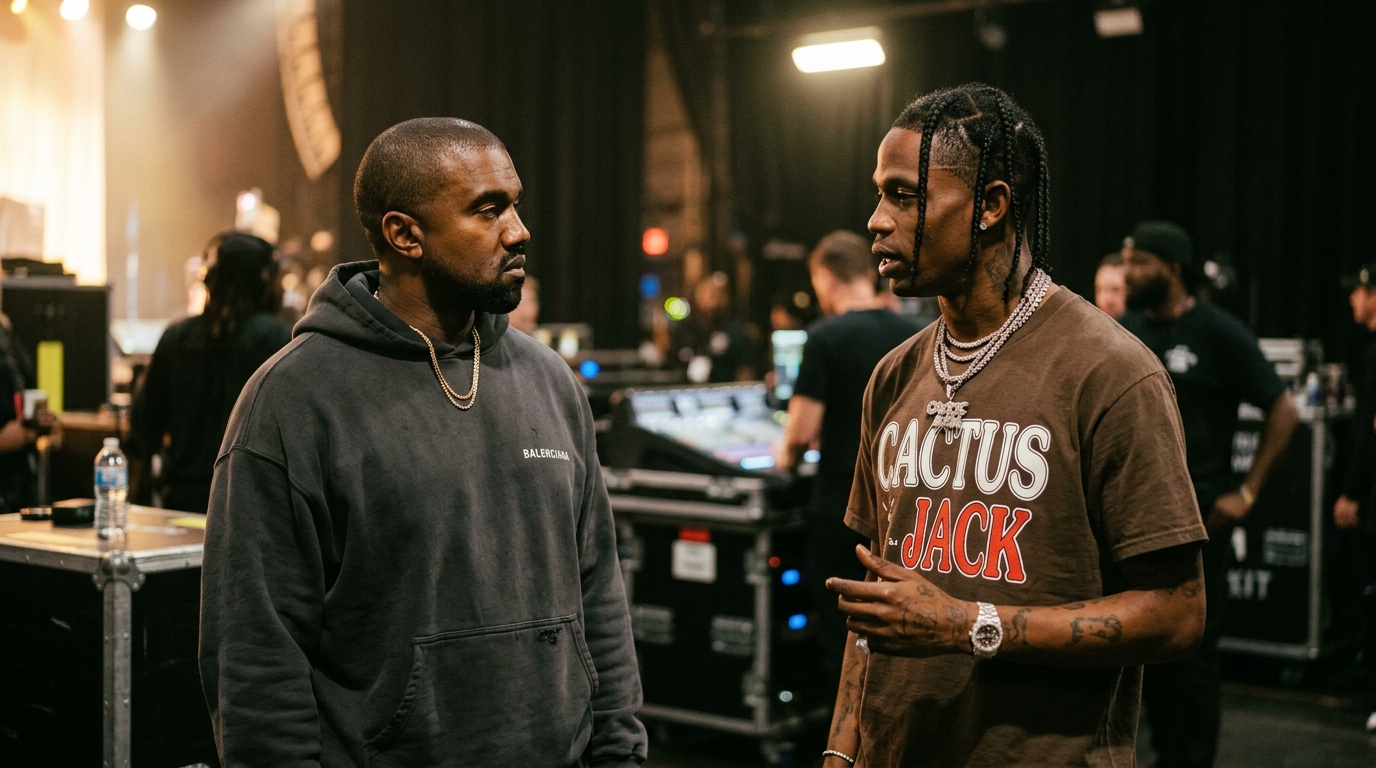
The artist attempted a public rehabilitation in January. He published a full-page apology in the Wall Street Journal attributing his erratic behavior to bipolar disorder. He explicitly stated he was not a Nazi. The gesture failed to secure his European tour dates. The United Kingdom entirely blocked his entry, triggering a domino effect of cancellations across the continent.
France postponed his Marseille appearance. Poland cited formal and legal reasons for scrubbing his Chorzów stadium show.
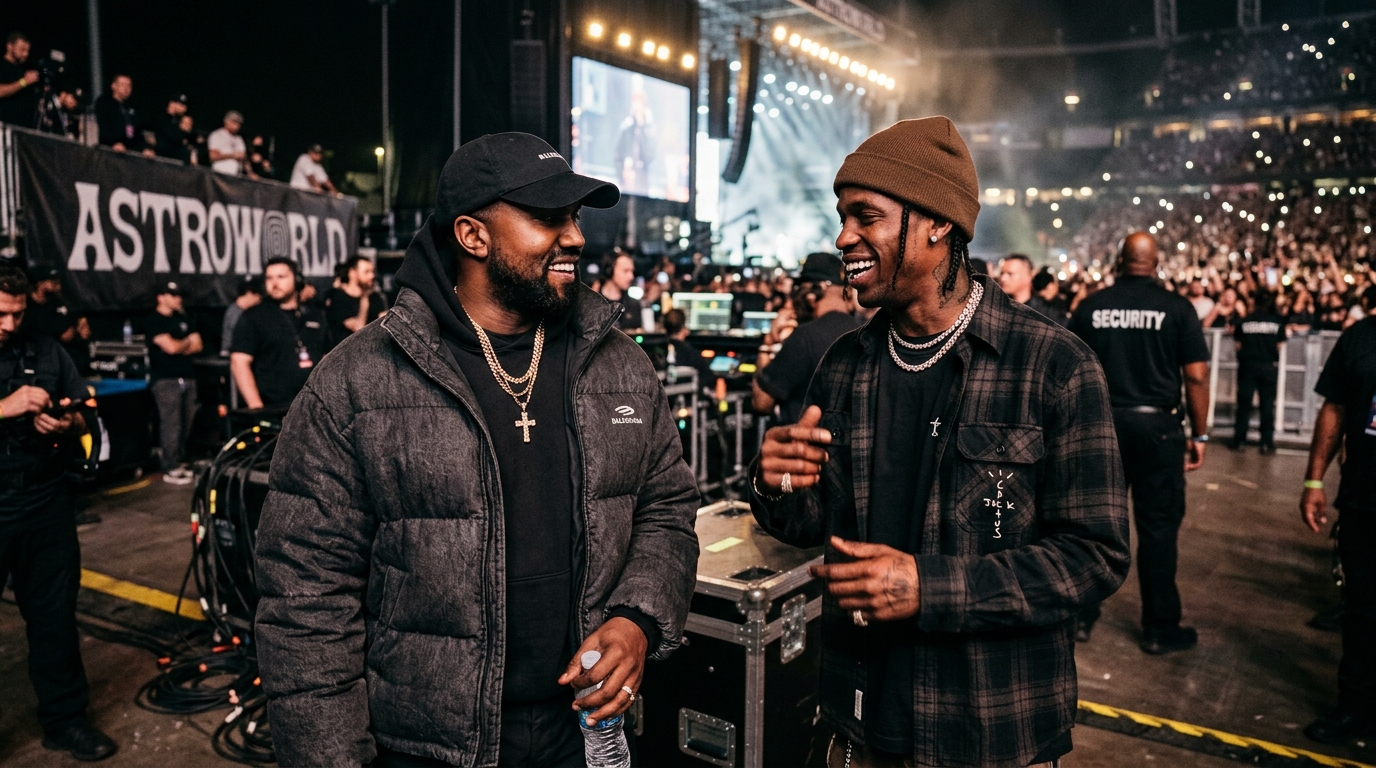
Scott carries his own heavy baggage into the European market. His 2021 Astroworld festival in Houston remains a stark cautionary tale for live event organizers. Ten individuals lost their lives in a devastating crowd crush during his set. The sheer density of the RCF Arena combined with Scott’s high-energy demographic left Italian officials unwilling to gamble with public safety.
The global live music sector watches these bans very closely.
Despite Western European resistance, West found a willing host in Turkey. He recently launched his summer tour at the Atatürk Olympic Stadium in Istanbul. He claimed to have drawn a historic crowd of 118,000 attendees.
Fans migrated to Istanbul from Germany, Russia, and the United Kingdom to witness the spectacle. Scott even joined West on a globe-shaped stage to perform their collaborative track Father. The song features on West’s latest project titled Bully. This eastward pivot reveals a fractured global market where controversial artists seek refuge in more permissive regulatory environments.
The Hellwatt festival organizers remain defiant. They plan to relocate the West concert to a neighboring jurisdiction.
This cat-and-mouse game between promoters and governments underscores the immense financial stakes of modern touring. Independent festivals rely heavily on the gravitational pull of mega-stars to drive ticket sales. The sudden loss of two massive headliners creates a significant economic vacuum for the organizers. It also sends a chilling message to booking agents across Europe.
Strict accountability is now woven into the touring contract.
The European landscape for West remains incredibly precarious. He still holds scheduled dates in the Netherlands and Albania later this summer. Local authorities in those regions will undoubtedly face similar pressures.
Public sentiment now acts as the ultimate gatekeeper for live entertainment. The days of separating the art from the artist are functionally over in major European markets. Municipalities will no longer absorb the security costs associated with polarizing figures. The Reggio Emilia ban sets a definitive precedent for how cities evaluate the cultural tax of hosting controversy.
The intersection of fashion, music, and politics is unforgiving. Reputations are dismantled just as quickly as they are built.
West and Scott must navigate this restrictive new reality. Their ability to command arenas is no longer solely dictated by streaming numbers or sneaker sales. It is now entirely dependent on municipal risk assessments. The Italian authorities have drawn a firm line in the sand. The architecture of the modern mega-tour requires more than just a massive stage and a captive audience.
It requires a fundamental baseline of public acceptability.
The music industry must recalibrate its approach to controversial talent. The cultural currency of shock value is rapidly depreciating. Organizers are learning that public safety and optics are inextricably linked today.
These cancellations also highlight a growing divide in international touring circuits. While Western Europe tightens its borders against problematic artists, other regions remain open for business. The success of the Istanbul date proves that demand for West has not entirely evaporated. It has simply been geographically displaced to markets with different cultural sensitivities.
The contrast is incredibly stark. European prefectures are prioritizing community harmony over massive economic injections.
Looking ahead to the remainder of the summer, the touring landscape feels exceptionally fragile. Every upcoming announcement will be scrutinized by local councils and activist groups. The era of the untouchable rock star has transitioned into an era of rigorous municipal oversight. West and Scott are currently the primary subjects of this severe operational shift in live music.
The ultimate true cost of controversy is a silenced microphone.
Frequently Asked Questions
Neden Kanye West ve Travis Scott'ın İtalya'daki konserleri iptal edildi?
İtalyan yetkililer, ciddi kamu düzeni ve güvenlik endişeleri nedeniyle her iki gösteriyi de iptal etti. Yerel Yahudi cemaati ve anti-faşist gruplar, West'in geçmişteki antisemitik söylemlerini protesto etti. Ayrıca yirmi dört saatlik kısa bir zaman diliminde toplanacak devasa kalabalıkların yaratacağı lojistik ve güvenlik riskleri de bu kararda etkili oldu.
İtalya'daki konserlerin nerede yapılması planlanıyordu?
Performansların kuzeydeki Reggio Emilia şehrinde bulunan RCF Arena'da gerçekleştirilmesi planlanıyordu. Travis Scott'ın 17 Temmuz'da Hellwatt festivalinde, Kanye West'in ise 18 Temmuz'da Pulse of Gaia festivalinde sahne alması bekleniyordu.
Kanye West Türkiye'de konser verdi mi?
Evet, West yaz turnesini kısa süre önce İstanbul'daki Atatürk Olimpiyat Stadyumu'nda başlattı. Konserin 118.000 kişilik rekor bir kalabalığı çektiği bildirildi. Birçok uluslararası hayran bu gösteriyi izlemek için farklı ülkelerden İstanbul'a seyahat etti.
Travis Scott'ın önceki Astroworld festivalinde ne olmuştu?
Houston'da düzenlenen 2021 Astroworld festivali sırasında yıkıcı bir izdiham yaşandı. Yaşları dokuz ile yirmi yedi arasında değişen on kişi hayatını kaybetti. Bu trajedi, onun gelecekteki konser izinlerini değerlendiren yerel yönetimler için hala büyük bir güvenlik endişesi oluşturuyor.
Kanye West'in diğer Avrupa turnesi tarihleri de iptal edildi mi?
İngiltere, Fransa ve Polonya'daki gösteriler de dahil olmak üzere birçok önemli Avrupa tarihi iptal edildi. Hollanda ve Arnavutluk'ta planlanmış performansları ise şu an için devam ediyor. İtalya'daki organizatörler Reggio Emilia gösterisini başka bir bölgeye taşımaya çalışıyor.
Kanye West'in İngiltere'ye girişi neden engellendi?
İngiltere hükümeti, antisemitik ve Nazi yanlısı yorum geçmişi nedeniyle ülkeye girişini engelledi. West'in gamalı haç içeren ürünler satması ve 2025'te tepki çeken bir şarkı yayınlaması bu kararın temelini oluşturdu. İngiltere'den men edilmesi, Londra'daki Wireless Festivali'ndeki ana sahne performansının da iptaline yol açtı.
Related
Articles
Readers always have access to latest trends and perspectives.







Comments: