

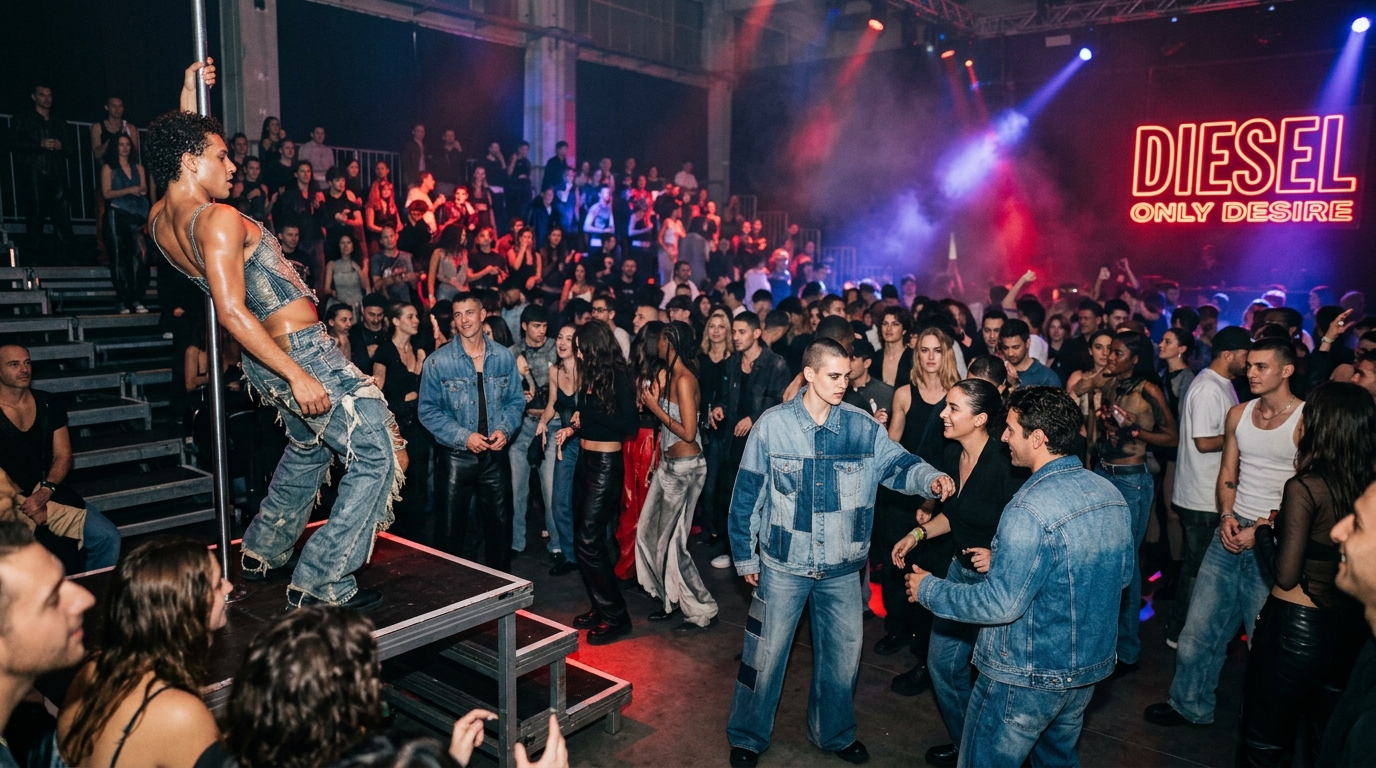
Diesel Spring/Summer 2027: The Architecture of a Hedonistic Farewell

Glenn Martens transformed a warehouse in Milan into a pulsating nightclub for his final Diesel show. The space was conceived by Studio Dennis Vanderbroeck. It pushed the concept of an anatomical theatre into the heat of a crowded dance floor.
This was not a traditional runway. The audience was entirely embedded within a live performance.
Martens has spent five years shifting Diesel from a standard jeans retailer to a lifestyle brand synonymous with unapologetic hedonism. His Spring/Summer 2027 collection served as a fitting swan song. As models navigated the room, roughly 200 performers from the Marseille collective (LA)HORDE mingled with the seated guests. The tension was palpable as the lines between spectator and cast blurred.
Spectators quickly realized there was no safe distance to hide.
A remix of Donna Summer’s "Love to Love You Baby" echoed through the venue. Performers planted in the bleachers began pole dancing and writhing. The stunt also served to market Diesel's new feminine perfume, Only Desire.
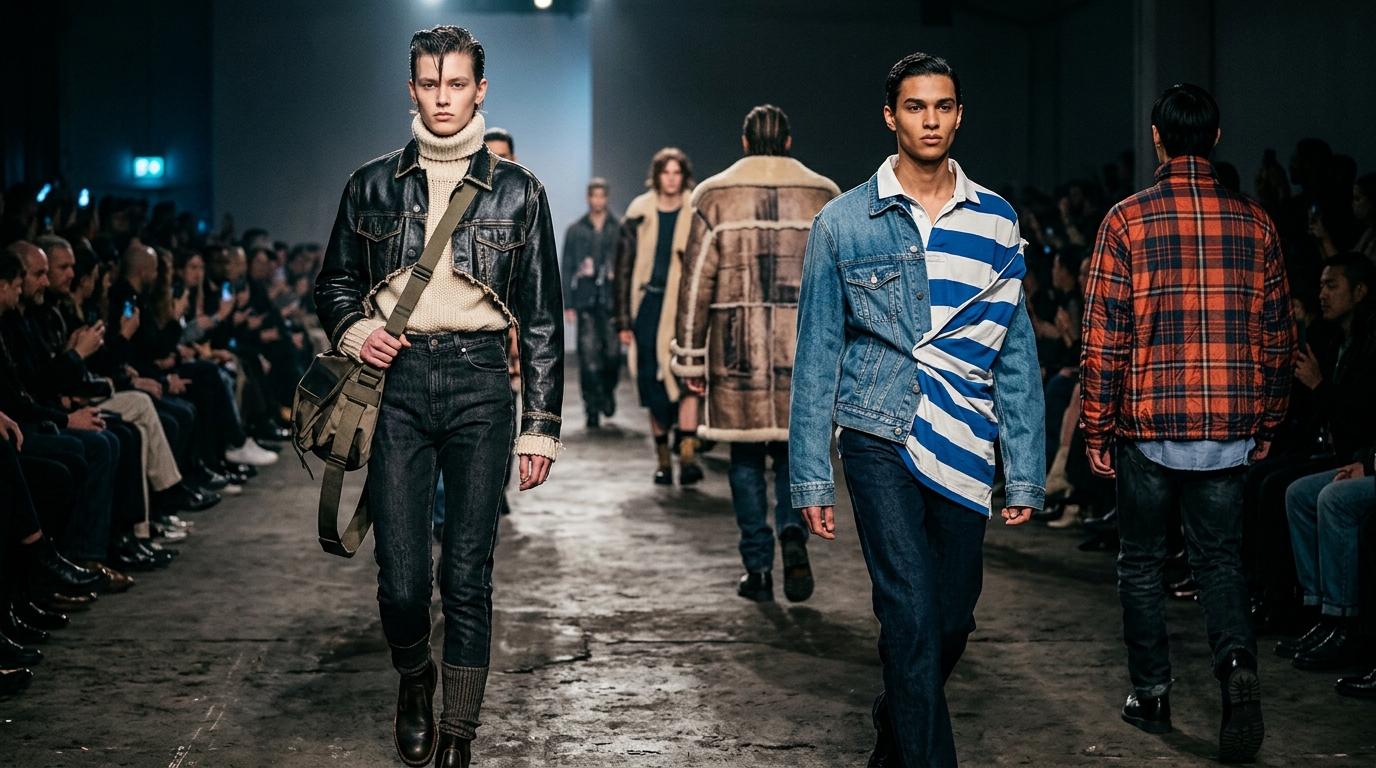
The clothing demanded as much attention as the theatrics. Martens proved his technical prowess once again by manipulating fabrics to the point of illusion. Denim was heavily coated and treated to resemble rigid leather. Heavy knits were interrupted by aggressive cutaways. Shirts, tailoring, and classic sweatshirts looked twisted, peeled back, or left deliberately undone.
Some pieces merged a classic trucker jacket seamlessly with a sporty quarter zip.
Other garments pushed the boundaries of standard construction. A traditional jeans jacket collided with a polo shirt. Martens even extended standard jeans into hybrid pantasocks. Shearling coats and lumberjack plaids were printed flat onto nylon.
The outfits became progressively skimpier as the night wore on.
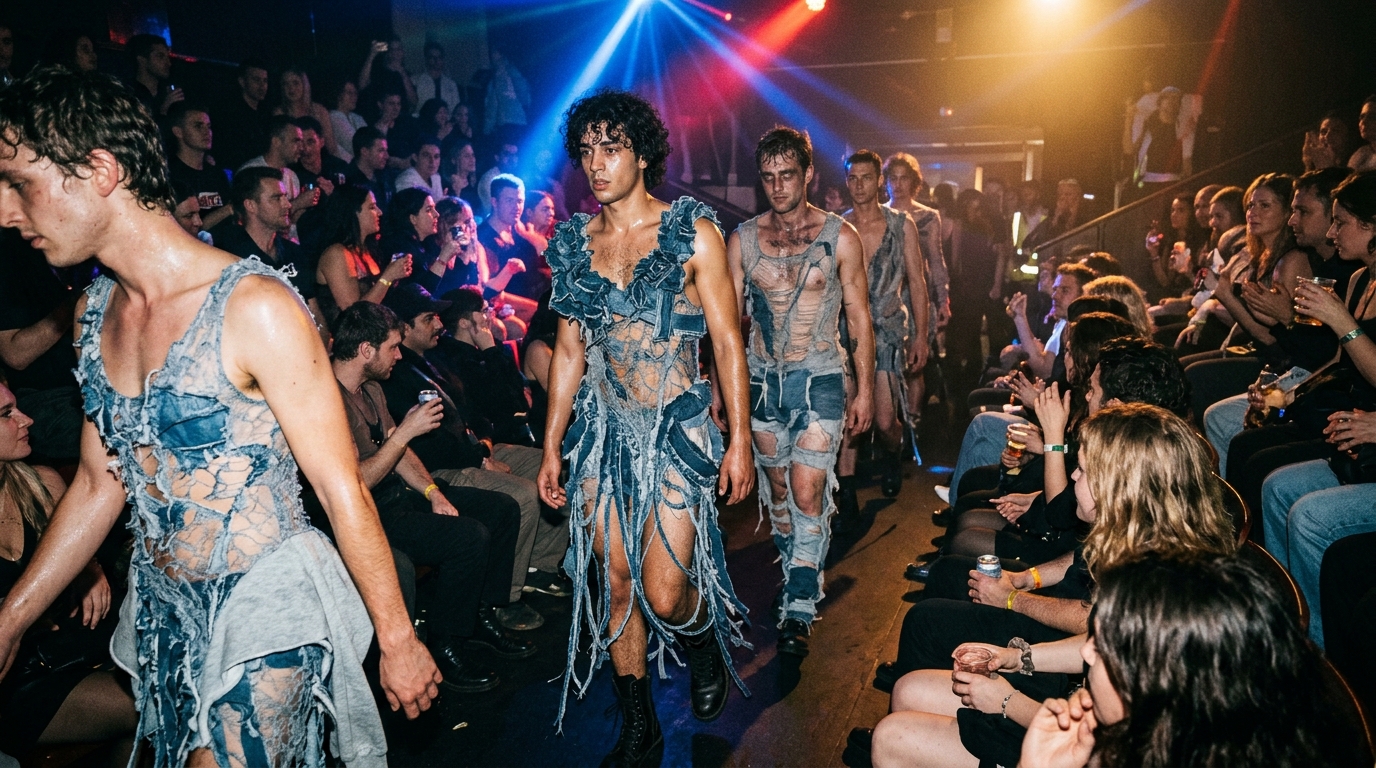
Male models emerged wearing minuscule oiled hot pants. The final looks featured nearly naked dresses constructed entirely from shredded denim and sweatshirt fleece. Martens engineered these casual fabrics so precisely that the remaining strands resembled delicate guipure lace. On a conventional runway, these intricate details might have invited a closer examination from international buyers.
Here, they simply belonged to people who looked like they were already hours deep into a chaotic and heavily intoxicated night.
Diesel has repeatedly treated its seasonal shows as occasions that extend far beyond the traditional catwalk format. Previous seasons featured an open-air rave and a citywide search for looks enclosed in massive transparent structures.
This season, the intervention moved entirely indoors and uncomfortably closer to the guests.
The spatial concept took distinct cues from historical anatomical theatres. These were places originally built for intense observation. Studio Dennis Vanderbroeck pushed that academic concept toward the sticky heat of a crowded music video. The resulting combination gave the show its core tension. The audience was constantly asked to look away from the actual runway.
Fashion occasionally felt secondary to the primal energy of the room.
The casting brought a sense of poetic closure to the event. Model Ella Snyder walked the finale look. She was the very same model who wore Martens’ debut look for Diesel five years ago. It was a thoughtful bookend to a wildly successful commercial chapter.
Martens will now dedicate his full attention to Maison Margiela in Paris. He spent the past year and a half doing demanding double duty for both of these prominent OTB-owned brands. Backstage, he expressed deep pride in establishing Diesel as a beacon of alternative luxury. The Belgian designer has undoubtedly left an indelible commercial mark on the label through his complex avant-garde silhouettes.
For Martens, denim has always remained an ultimate canvas.
He noted that the beauty of denim lies in its soul. The more you work on it and wear it, the more beautiful it becomes. This philosophy was woven into every distressed seam and trompe-l'œil print of the Spring collection.
By the end of the show, the distinction between a fashion presentation and a genuine rave had vanished entirely.
Lighting by Lightlab Studio and sound by Sen Studio kept the momentum surging long after the final bow. Martens’ departure gave the evening a natural, bittersweet ending. Yet, the physical space Diesel built looked entirely prepared to carry on until the early hours of morning.
It was a loud, chaotic, and perfectly executed exit for a true industry visionary.
Frequently Asked Questions
When did the Diesel Spring/Summer 2027 show take place?
The Diesel Spring/Summer 2027 show took place on Monday during the September 2026 Milan Fashion Week. It marked Glenn Martens' final collection as the creative director for the brand.
Who designed the set for the Diesel SS27 runway?
Studio Dennis Vanderbroeck designed the set. They transformed the venue into a purpose-built club inspired by historical anatomical theatres.
What performance group was involved in the Diesel show?
The Marseille-based collective (LA)HORDE directed the live interventions. Around 200 performers mingled with the audience to blur the lines between spectators and the show.
Why is Glenn Martens leaving Diesel?
Glenn Martens stepped down from Diesel to dedicate his full attention to Maison Margiela in Paris. He had been managing dual creative director roles for both OTB-owned brands for the past year and a half.
What perfume was marketed during the Diesel show?
The immersive club experience doubled as an experiential marketing stunt for Only Desire. This is Diesel’s new feminine perfume that launched over the summer of 2026.
Who was the model that closed the Diesel SS27 show?
Model Ella Snyder closed the show. This was a poetic casting choice, as she also wore Glenn Martens' very first look for his debut Diesel collection five years prior.
Related
Articles
Readers always have access to latest trends and perspectives.






Comments: