

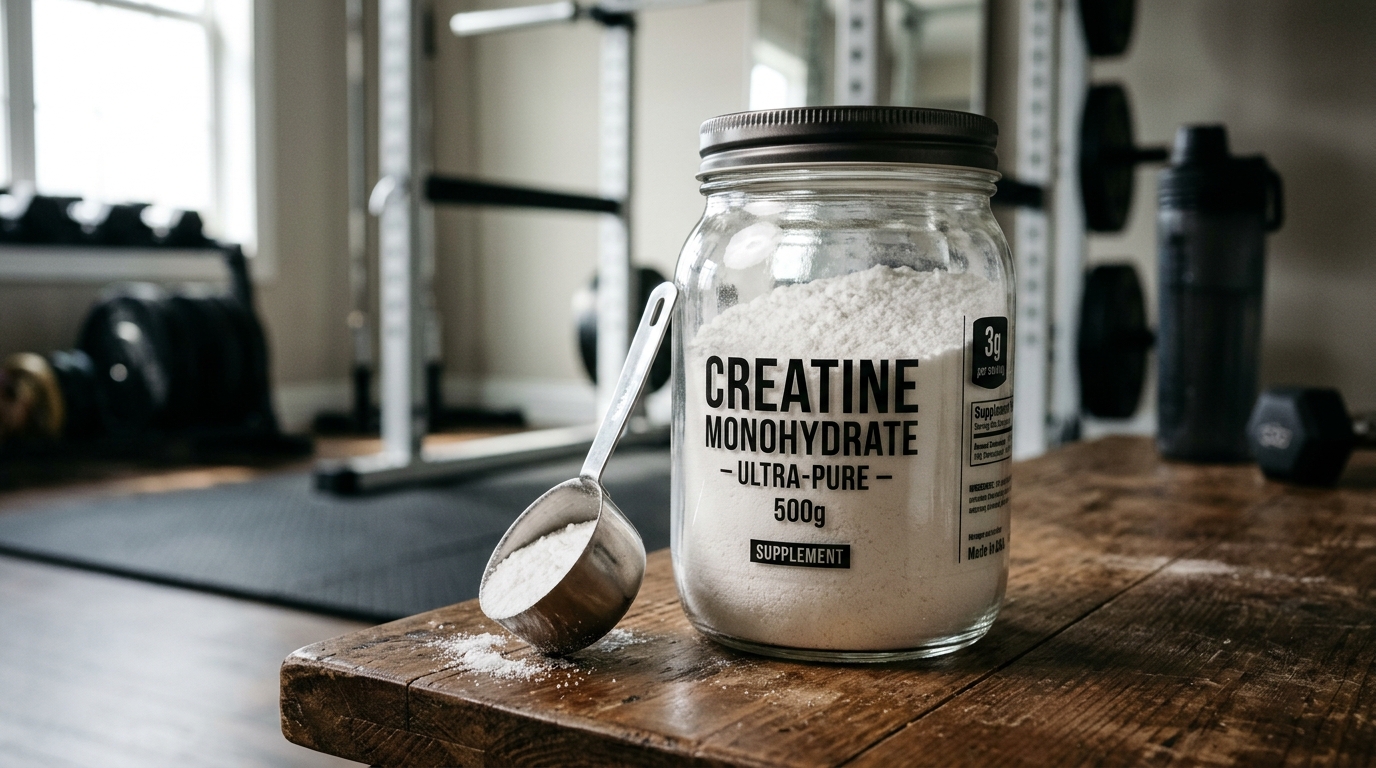
Creatine and Mental Health: The Architecture of Cellular Energy


The latest evidence on whether creatine can help your mental health reveals a fascinating shift in modern wellness. The supplement was once exclusively relegated to fitness fanatics and weightlifters. Today, it has infiltrated the most sophisticated longevity and cognitive health circles. The science points toward a broader systemic application.
This transition from a muscle builder to a cognitive enhancer is firmly rooted in cellular biology.
The human brain is a remarkably energy-hungry organ. It accounts for merely two percent of our total body weight yet consumes a staggering twenty percent of our energy. This demand peaks during complex cognitive tasks and periods of intense focus. When this energy supply dwindles, the delicate chemical balance dictating our mood begins to falter. Researchers are increasingly viewing this energy deficit as a core issue.
The implications for modern psychiatry are undeniably compelling.
Decades ago, scientists uncovered a curious relationship between suicidal ideation and low creatine levels. Modern clinical reviews suggest the supplement may serve as an effective complementary treatment for severe depression.

A recent systematic review analyzed five distinct trials involving nearly two hundred and forty patients to measure these psychiatric benefits. The data remains highly nuanced. Two trials demonstrated clear benefits, while three showed no significant effect. The variations in dosage and administration time make definitive conclusions challenging. Scientists agree that significantly larger trials are urgently required.
Creatine naturally occurs in our bodies and specific dietary sources.
You can find it abundantly in white and red meat, alongside specific fish like salmon, tuna, cod, and herring. The body synthesizes this compound from amino acids to rapidly regenerate adenosine triphosphate. This molecule powers every cellular action.
Dr. Michael Fredericson of the Stanford Center on Longevity emphasizes that this rapid energy regeneration extends far beyond athletic performance. Most creatine is stored within skeletal muscle. A smaller, yet critical, fraction resides directly in the brain. Researchers have documented that depressed individuals frequently exhibit depleted creatine reserves in their frontal lobes, a critical brain region governing emotional regulation.
This biological deficit creates a highly specific therapeutic target.
Studies focusing on treatment-resistant depression in teenagers have yielded highly promising results. Participants who integrated creatine alongside their standard psychiatric medication reported significant improvements in their baseline mood.
The compound is equally gaining traction for its protective effects against acute sleep deprivation.
A specialized study involving fifteen healthy participants investigated the effects of a massive twenty-five-gram dose of creatine during intense sleep deprivation. Brain scans confirmed that exhaustion severely depleted cerebral creatine stores. Following supplementation, the scans visibly demonstrated the brain absorbing and utilizing the compound. The participants experienced immediate cognitive revitalization.
They recorded measurable improvements in short-term memory, information processing, and reaction speed. These acute benefits suggest a tactical application for highly demanding modern lifestyles.
Women stand to benefit uniquely from this specific dietary addition.
Andy Moore of NPL Nutritional Performance Labs highlights the critical nature of muscle preservation as women age. Muscle loss can begin as early as our thirties. The decline in estrogen during menopause accelerates this deterioration while simultaneously threatening bone density. Creatine supplementation paired with resistance training offers a profound defense against these hormonal and structural vulnerabilities.
Nutritionist Rashi Chowdhary specifically advocates for the supplement to combat perimenopausal brain fog. She recently outlined three vital reasons women must stop dismissing creatine. The focus must shift from aesthetic bodybuilding to fundamental, long-term cellular health.
Chowdhary notes that creatine operates as a powerful nootropic to support fluctuating brain energy during menopause.
She points out that many women readily accept herbal remedies like Ashwagandha but remain irrationally intimidated by creatine. It protects against bone breakdown and helps mitigate the accelerated aging process that many women experience. A standard daily intake of three to five grams of highly purified creatine monohydrate remains the gold standard for achieving these systemic benefits.
Dria Murphy of By Dria insists on rigorous third-party testing for purity. She notes that consistency matters far more than precise timing. You do not need a complicated loading phase to see noticeable results.
The commercial supplement landscape continues to evolve rapidly.
Brands are now formulating sophisticated blends designed for healthy aging. Elysium Health recently introduced Creatine+, pairing micronized creatine monohydrate with beta-hydroxy beta-methylbutyrate and pomegranate polyphenols. This specific combination regulates muscle protein metabolism while actively supporting mitochondrial function. It represents the future of targeted supplementation.
We must approach these emerging cognitive and psychiatric applications with appropriate scientific restraint.
While the research surrounding Alzheimer's disease and fluid intelligence is undeniably encouraging, the sample sizes remain quite small. The precise dosage required to reliably penetrate the brain barrier for mental health treatment remains entirely unknown.
We are currently witnessing the rebranding of a legacy fitness compound.
Frequently Asked Questions
What is the best form of creatine for mental health benefits?
The scientific community widely considers creatine monohydrate the gold standard. It boasts decades of rigorous testing for both safety and efficacy in cognitive and physical applications.
How much creatine should I take daily for brain health?
Experts generally recommend a consistent daily dose of three to five grams for healthy adults. Research is still determining if higher doses are necessary specifically for psychiatric or cognitive treatments.
Does taking creatine cause weight gain in women?
The compound draws water into your muscle cells, which can cause a slight increase on the scale. This is purely intramuscular water retention and should never be confused with gaining body fat.
Can creatine improve symptoms of perimenopause?
Emerging evidence suggests it functions as a nootropic to help combat brain fog associated with hormonal shifts. It also supports muscle retention and bone health when paired with regular resistance training.
What foods naturally contain high levels of creatine?
You can find it naturally in red meat and poultry. Certain types of fish, including salmon, herring, cod, and tuna, also provide highly concentrated amounts of the natural compound.
Do I need to exercise to get the mental health benefits of creatine?
While physical training maximizes muscle strength gains, cognitive benefits operate independently. The brain readily absorbs the supplement to replenish cellular energy regardless of your daily physical activity levels.
Related
Articles
Readers always have access to latest trends and perspectives.







Comments: