

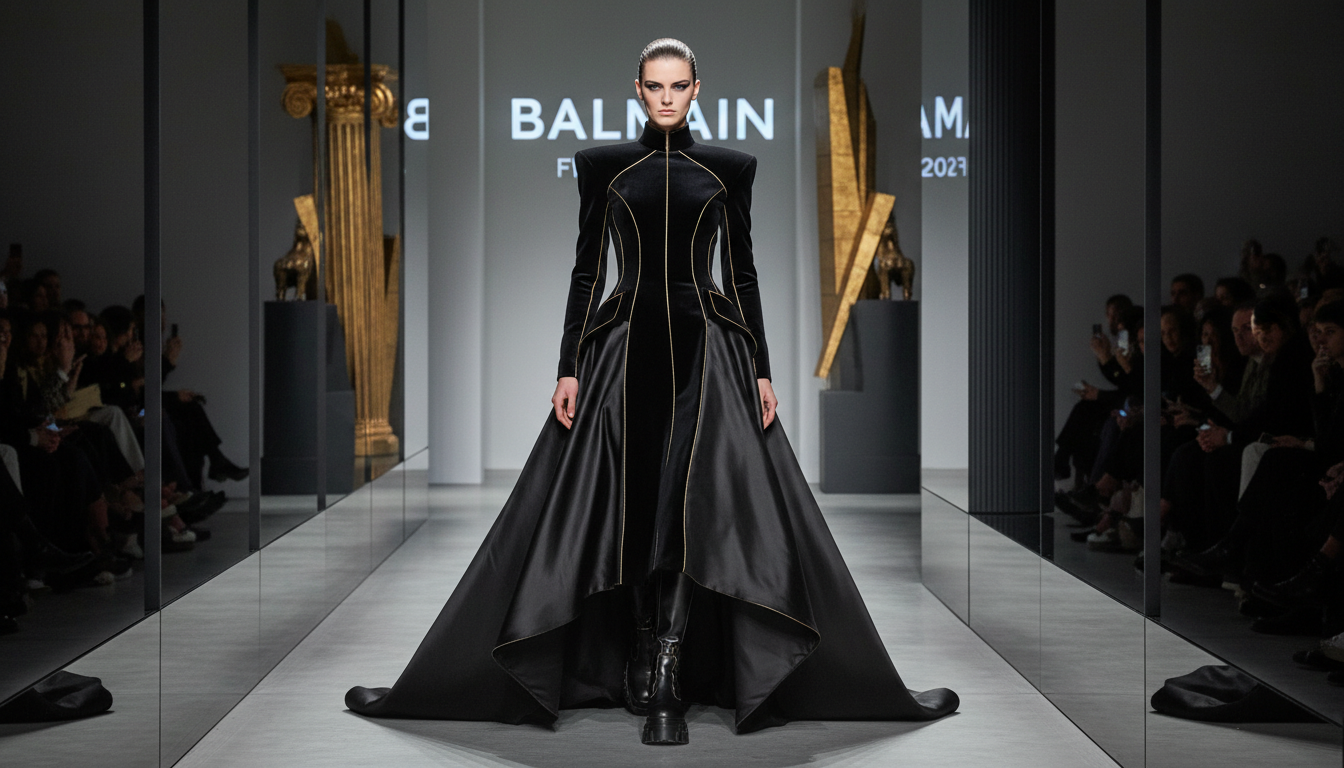
Balmain Fall/Winter 2026: The Architecture of Minimal Opulence


Balmain Fall/Winter 2026 marks a decisive pivot in the house’s storied trajectory. In a stark, concrete venue draped in gauzy white curtains, the industry gathered to witness Antonin Tron’s first collection as creative director. The atmosphere felt heavy with the scent of leather and the anticipation of a new era. Tron replaced Olivier Rousteing after a fourteen-year tenure that defined the brand’s modern celebrity culture. His task was to reset the clock without losing the passenger.
Transitioning from the high-octane glamour of the previous decade required a steady hand and a deep respect for the archives.
Tron looked specifically to the house's inception in 1946. He excavated two original gowns that served as the blueprint for what he calls minimal opulence. The result was a collection that avoided the literal traps of vintage reproduction. Instead, it favored a sensual rigor inspired by film noir heroines and the quiet strength of 1940s tailoring. One could see the influence of film titles like Mulholland Drive and The Hunger in the shadowy silhouettes that drifted past the spectators.
The opening look set a pragmatic tone for the flight ahead.
It was a flight jacket crafted from rich matte lambskin. This piece paid homage to Danielle Décuré, the first female pilot for Air France, who famously wore a Balmain-designed uniform in 1975. The jacket featured a structured waist and was paired with narrow trousers. It signaled a shift toward clothes that are meant to be lived in, not just photographed on a red carpet. This was a Balmain woman who is unapologetic and in total control of her own narrative.
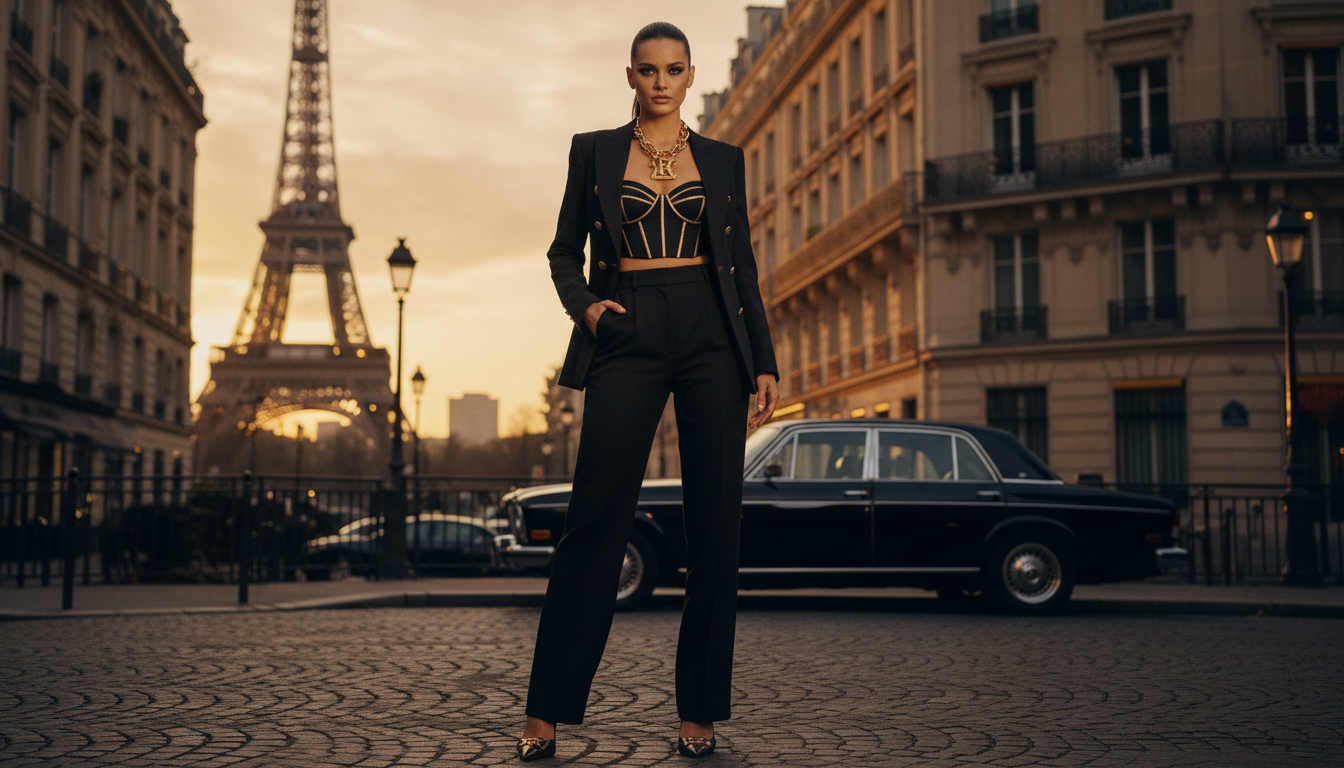
Materiality played a central role in communicating luxury within a darker palette. Deep oxbloods, midnight blues, and forest greens often appeared black under the flickering runway lights. This was a deliberate choice to force the viewer to look closer at the textures. A black coat featured hand-cut leather feathers that moved with a liquid grace. Croc-effect pieces were achieved through intricate leather mosaics edged with caviar beads. This level of craft speaks to the couture soul of the house.
The leopard print of 1953 made a return, though it was rendered with contemporary restraint.
A minidress in the signature fauna pattern transitioned into a frayed fabric at the hemline, adding a sense of speed and movement. Tron also leaned into his own background as a surfer to solve a commercial puzzle. He introduced accessories like a soft leather clutch inspired by beach dry bags. It was an unexpected touch of utility in a collection otherwise defined by its sharp, urban edge. The footwear featured tortoiseshell-resin details that were easily missed in the gloom of the venue.
The market context for this debut is one of calculated stabilization.
Under Rousteing, Balmain grew into a powerhouse of maximalist expression. However, the global appetite for quiet luxury has forced a recalibration across the industry. Tron’s background at Louis Vuitton, Givenchy, and Balenciaga has clearly prepared him for this moment. He understands that a heritage brand must move with the times without abandoning its core identity. His version of Balmain is more approachable and everyday, yet it retains a certain nocturnal fierceness that keeps it from feeling bland.
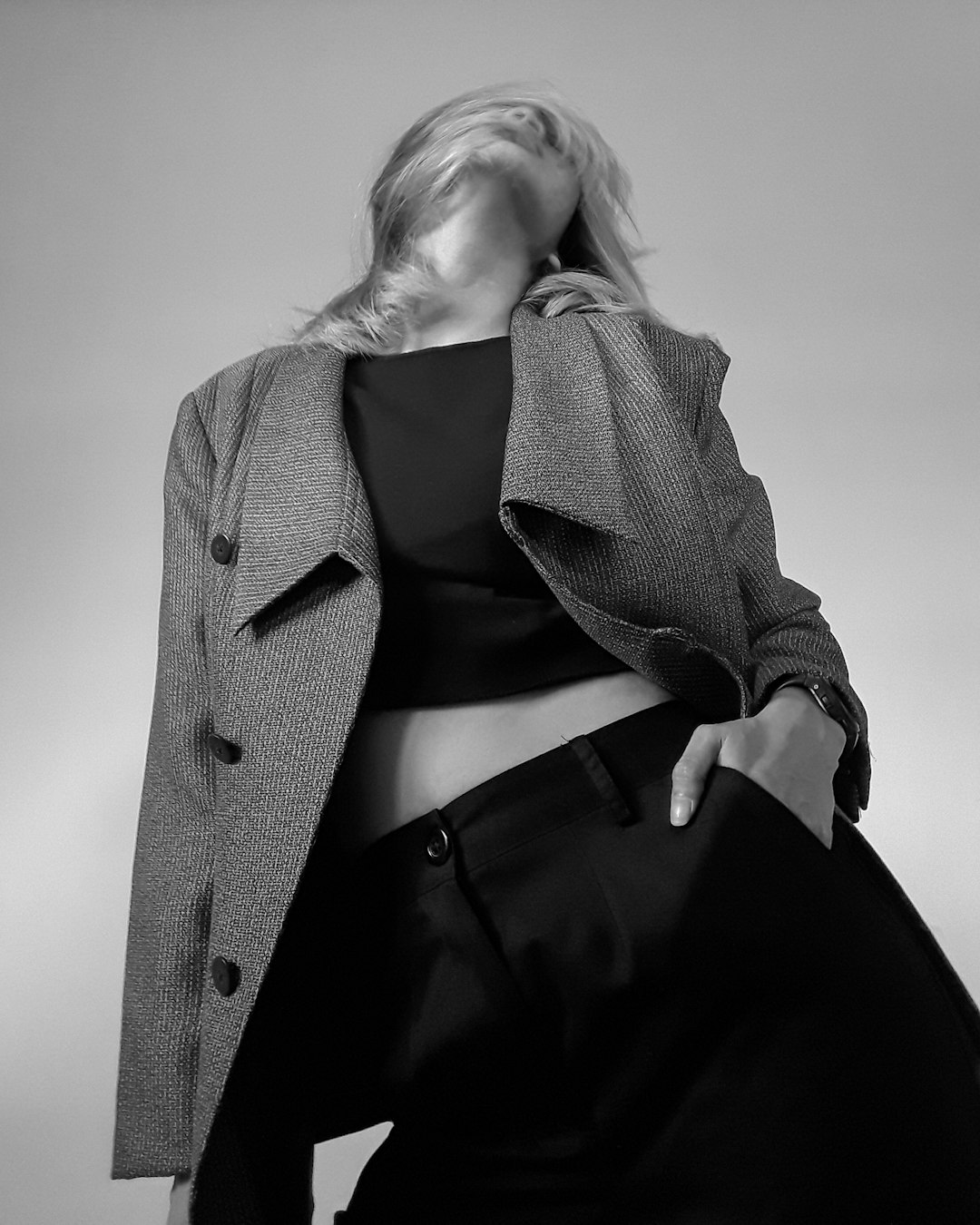
Tron was careful to mention his respect for the existing clientele. He acknowledged that Balmain is a rare house where ready-to-wear sells with the consistency of leather goods. By focusing on the female form through his signature jersey draping, he offered a bridge between the old and the new. The silhouette remained body-hugging and sharp-shouldered, but the execution was more austere. It was a collection designed for a woman who values the privacy of a well-cut garment over the noise of a logo.
The verdict on this debut is one of quiet success and technical precision.
While some critics might argue the presentation was too dark to see the finer details, the intention was clear. Tron is building a wardrobe for a cinematic life. He has traded the spotlight for the shadows, but in doing so, he has found a deeper sense of character. The "minimal opulence" he describes is not a lack of detail. It is the refinement of detail. Balmain is now in the hands of a pilot who knows exactly how to navigate the clouds.
Frequently Asked Questions
Who is the new creative director of Balmain as of Fall/Winter 2026?
Antonin Tron is the new creative director. He succeeded Olivier Rousteing, who led the house for fourteen years before departing in late 2025.
What was the main inspiration for the Balmain FW26 collection?
Tron drew inspiration from the house's 1946 debut collection by Pierre Balmain. He also referenced film noir, 1940s Hollywood heroines, and the uniform designed for Air France's first female pilot.
What does "minimal opulence" mean in the context of this collection?
It refers to a design philosophy that favors rich textures and intricate craft over loud embellishments. It focuses on the quality of fabrics like lambskin and velvet while maintaining a restrained, dark color palette.
How did the FW26 collection pay tribute to Air France?
The opening look featured a matte lambskin flight jacket. It was a direct reference to Danielle Décuré, a trailblazing pilot who wore a Balmain uniform in 1975.
What are some of the key technical details in the Balmain FW26 garments?
The collection featured hand-cut leather feathers, leather mosaics edged with caviar beads, and cloque jacquards. Tron also incorporated his signature jersey-knit draping.
Is Antonin Tron still designing for his own brand, Atlein?
No. Tron has put his personal label, Atlein, on hold to focus entirely on his new role at Balmain.
What were the primary colors used in the Fall/Winter 2026 runway show?
The palette was heavily "noir" and nocturnal. It consisted of black, oxblood, midnight blue, and forest green, often appearing as subtle variations of dark tones.
Related
Articles
Readers always have access to latest trends and perspectives.






Comments: