


Air Pollution and Weather Tied to Migraines: The Invisible Architecture of Pain


The atmosphere is rarely something we scrutinize until it begins to betray us. The recent clinical revelation that air pollution and weather tied to migraines are escalating hospital visits demands our attention. We are no longer merely dressing for the elements. We are actively defending our neurology against them. The air itself has become a measurable medical variable.
A new study published this April in the journal Neurology strips away the mystery. The environment is pulling the strings.
Researchers analyzed the Negev Migraine Cohort in Be'er Sheva, tracking over seven thousand adult patients. The data is clinically stark. High levels of nitrogen dioxide correlate with a forty-one percent increase in emergency visits. This is not a vague seasonal allergy. This is a severe neurological event triggered by the exhaust of cars and the emissions of power plants.
The findings map a complex, layered model of acute susceptibility.
Cumulative exposure to fine particulate matter drives up the demand for triptan prescriptions. Patients are actively requiring more medication just to function. The air quality is quietly eroding their baseline health.
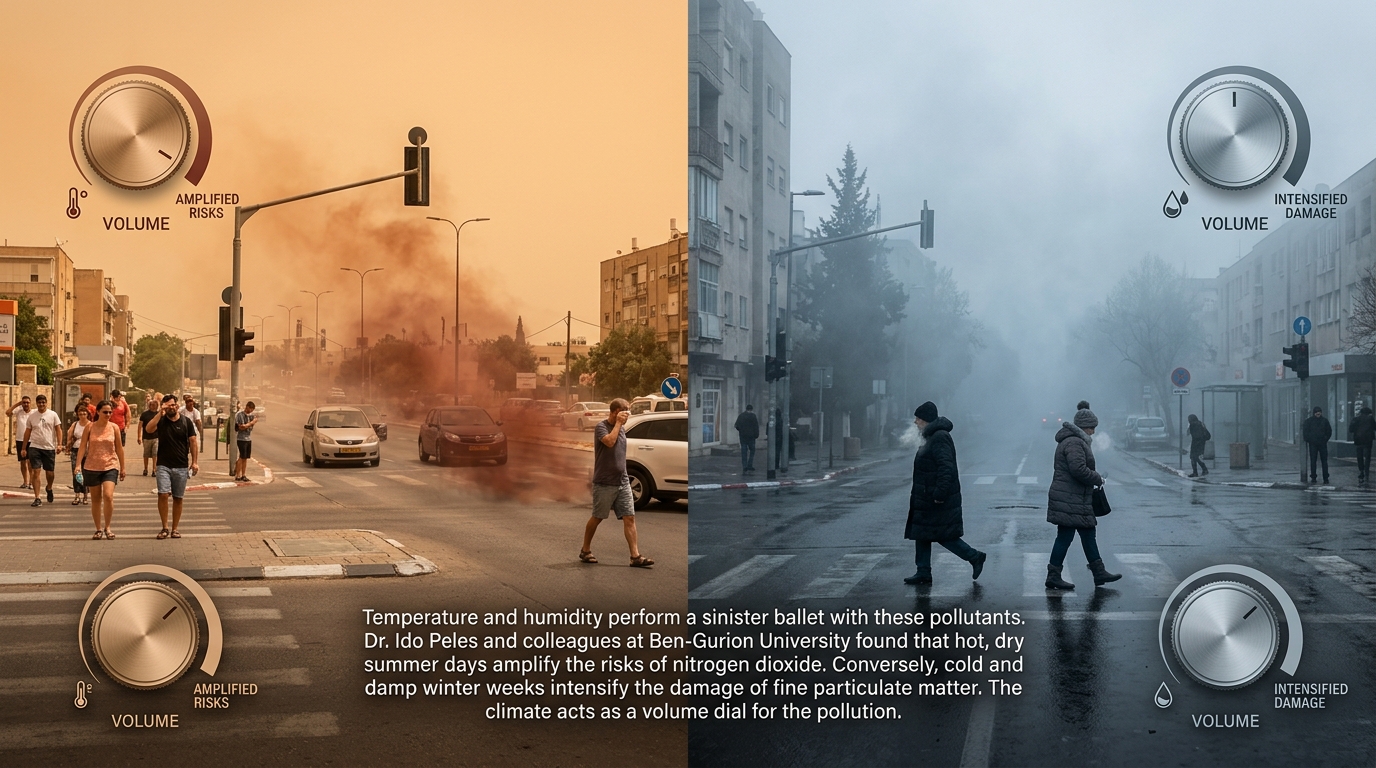
Temperature and humidity perform a sinister ballet with these pollutants. Dr. Ido Peles and his colleagues at Ben-Gurion University found that hot, dry summer days amplify the risks of nitrogen dioxide. Conversely, cold and damp winter weeks intensify the damage of fine particulate matter. The climate acts as a volume dial for the pollution.
Solar radiation provides another trigger. High UV days push emergency room visits up by 23 percent.
The physiological mechanics behind this phenomenon are deeply intricate. Dr. Sana Ghafoor at Tufts Medical Center points to neuroinflammation. The body registers inhaled pollution as an invading allergen. This initiates an immune response in the brain and spinal cord. Pain chemicals like calcitonin gene-related peptide flood the system. The result is a sharp, pulsating pain that can incapacitate a person entirely.
Summer heatwaves introduce the secondary catalyst of severe dehydration.
Even a minor drop in body water causes brain tissue to physically shrink. Dr. Rupali Mehrotra in Kanpur notes this pulls the tissue away from the skull. It stimulates hyper-sensitive pain receptors.

Heat also forces blood vessels to dilate in an attempt to dissipate warmth. Dr. Clifford Segil at Providence Saint John's Health Center explains that this expansion irritates constrained nerves. High humidity compounds the issue by triggering excessive sweating. The loss of fluids then decreases blood volume. Both the expansion and contraction of these vessels invite agony.
There is a profound difference between a standard dehydration headache and a climate-triggered migraine.
A severe migraine often announces itself up to a full day in advance. Patients experience fatigue, stiff necks, and sudden mood shifts before the unilateral throbbing begins. A simple glass of water will not cure it. Neurologists recommend retreating to a dark, cool, and silent room. Immediate intervention with fast-acting triptans or non-steroidal anti-inflammatory drugs is necessary.
Prevention requires a calculated adjustment to our daily lifestyle routines.
Doctors advise monitoring daily atmospheric indices. Staying indoors with proper air purification during peak pollution hours is a sensible strategy. Hydration must include electrolytes, not just plain water, to maintain internal balance.

As global temperatures rise and extreme weather events multiply, this neurological vulnerability will only become more common. Precision neurology must integrate these environmental risks into standard patient care. The climate crisis is effectively a health crisis. Our bodies are recording the shifts in the atmosphere with painful accuracy.
We can no longer afford to treat the air we breathe as an invisible, benign constant.
Understanding your personal threshold is the ultimate armor. Keeping a detailed symptom diary allows you to decode your specific environmental sensitivities. It empowers you to anticipate an attack rather than merely reacting to the pain. The modern wardrobe requires more than UV-blocking sunglasses and lightweight fabrics. It demands a heightened awareness of the barometric pressure, the humidity, and the particulate count.
Awareness is the most effective prescription against an altering climate.
We must adapt our behaviors to match the changing environment. Tracking the daily air quality is now just as vital as checking the temperature. The invisible architecture of the air holds undeniable power over our physical and mental wellbeing.
Frequently Asked Questions
How does air pollution directly cause a migraine?
Air pollution acts as an environmental irritant that triggers an immune response in the body. Inhaling fine particulate matter or nitrogen dioxide can cause neuroinflammation in the brain and spinal cord. This inflammation releases pain chemicals like calcitonin gene-related peptide, resulting in severe head pain.
Can high temperatures and humidity trigger headaches?
Yes. Extreme heat forces blood vessels in the brain to dilate in order to dissipate warmth. High humidity causes excessive sweating, which leads to fluid loss and a decrease in blood vessel volume. Both the expansion and contraction of these vessels irritate sensitive nerves.
What is the difference between a dehydration headache and a migraine?
A dehydration headache typically presents as a dull, bilateral pain that resolves after drinking fluids. A migraine is a severe, pulsating pain usually localized to one side of the head. Migraines are often accompanied by nausea, light sensitivity, and preliminary symptoms like fatigue or mood shifts.
How does solar radiation affect migraine frequency?
High levels of ultraviolet exposure from solar radiation overstimulate the visual cortex. Clinical data shows that days with an elevated UV index correspond to a 23 percent increase in emergency clinic visits for migraine symptoms. Wearing polarized sunglasses and wide-brimmed hats can help mitigate this specific trigger.
What medications are used to treat climate-triggered migraines?
Physicians typically prescribe fast-acting triptans to abort a migraine attack once it begins. Non-steroidal anti-inflammatory drugs like naproxen sodium are also utilized as a primary defense. Treating the symptoms early, ideally during the initial prodrome phase, yields the best results.
How can I protect myself from pollution-induced migraines?
Monitoring local air quality indices is the most effective preventative measure. During periods of high nitrogen dioxide or fine particulate pollution, remaining indoors with an active HEPA air purifier is recommended. Wearing an N95 mask outdoors can also reduce the inhalation of airborne triggers.





Comments: