


12-Hour Overnight Fasting: The New Architectural Standard for Circadian Health


The modern evening is often a cluttered affair. We indulge in late-night grazing and blue-light exposure that disrupts the delicate internal machinery of our bodies. However, a landmark study from Northwestern Medicine suggests that the most sophisticated thing we can do for our heart health is simply to stop. By anchoring our fasting window to our sleep cycle, we allow the body to return to its intended rhythm. This is not about deprivation. It is about timing.
New data published in February 2026 reveals that a twelve hour overnight fast can significantly lower blood pressure and stabilize glucose.
The research, led by Dr. Phyllis C. Zee and published in the journal Arteriosclerosis, Thrombosis, and Vascular Biology, focused on middle-aged adults at risk for cardiometabolic disease. For 7.5 weeks, participants stopped eating three hours before bed. They also dimmed their lights during this window to better align with their circadian rhythms. The result was a measurable 3.5% drop in nighttime blood pressure and a 5% fall in heart rate. These figures represent the return of a healthy overnight dipping pattern.
Crucially, participants achieved these results without cutting a single calorie from their daily intake.
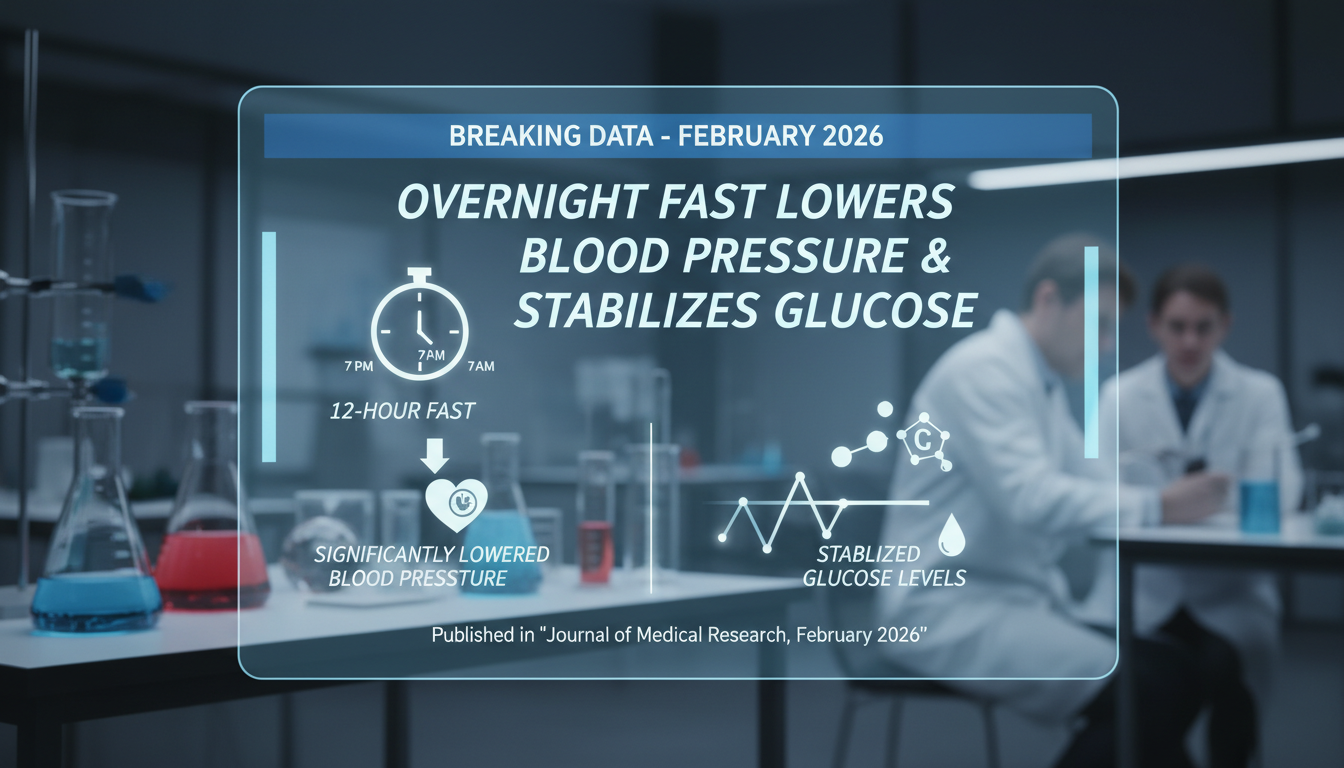
The biological craft here is fascinating. Our bodies operate on a 24-hour clock that regulates everything from hormone release to metabolic rate. When we eat late, we force our system to manage digestion at a time when melatonin levels are rising and the body is attempting to shift into rest mode. This creates a metabolic friction. By extending the fast to 12 or 16 hours and ending food intake early, we remove that friction. The pancreas responds more efficiently to daytime glucose.
This approach treats the body like a finely tuned engine. It requires a specific cool-down period.
In terms of market context, we are seeing a shift away from high-friction diets that require constant tracking. The luxury consumer is moving toward "invisible" health interventions. This fasting protocol is perfectly aligned with that ethos. It is low-cost and high-impact. It requires no specialized equipment or expensive meal plans. Instead, it relies on the discipline of the schedule. It is the ultimate minimalist lifestyle upgrade for the health-conscious individual.
The verdict is clear. The most effective way to protect your heart is to respect the sunset.

Adherence in the Northwestern study was remarkably high at nearly 90%. This suggests that while traditional dieting feels like a chore, time-restricted eating feels like a ritual. Participants found the 13 to 16-hour fasting windows manageable because the majority of the time was spent in restorative sleep. The study highlights that our cardiovascular health span is intimately tied to how well we coordinate our habits with our biological reality. It is a masterclass in physiological efficiency.
Small adjustments in timing yield disproportionate rewards for the heart and the metabolic system.
For those looking to implement this, the transition should be gradual. Start by moving your last snack earlier by fifteen minutes each night. Ensure your environment reflects this shift by dimming the lights three hours before you intend to sleep. This signals the brain to begin the melatonin transition. The goal is to allow the heart rate and blood pressure to dip naturally during the night. This serves as a vital reset for the entire cardiovascular system.
Frequently Asked Questions
What was the specific fasting window used in the Northwestern Medicine study?
Participants in the intervention group extended their overnight fast to between 13 and 16 hours. They were specifically required to stop eating at least three hours before their scheduled bedtime to align with their circadian rhythms.
Did participants have to lose weight to see improvements in blood pressure?
No. The study found that improvements in blood pressure and heart rate occurred without cutting calories or intentional weight loss. The benefits were attributed to the timing of the food intake rather than the quantity of food consumed.
How much did blood pressure and heart rate improve during the study?
The study recorded a 3.5% decrease in nighttime blood pressure and a 5% decrease in heart rate. These changes indicate a healthier day-to-night rhythm, where the body effectively enters a restorative state during sleep.
Why is dimming the lights important for this fasting protocol?
Dimming the lights three hours before bed helps regulate the body's internal clock by allowing melatonin levels to rise naturally. This prepares the metabolic and cardiovascular systems for the fasting state and the restorative processes of sleep.
Can this fasting method help with blood sugar control?
Yes. The researchers found that participants in the extended fasting group showed improved daytime blood sugar control. Their insulin response to glucose was more effective, suggesting that the pancreas functions more efficiently when meals are aligned with sleep cycles.
Who can benefit most from a 12-hour overnight fast?
The study focused on middle-aged and older adults with elevated cardiometabolic risk, such as those who are overweight or obese. However, experts suggest that aligning meal times with the body's natural sleep-wake cycle is a practical strategy for anyone looking to support heart health.
Related
Articles
Readers always have access to latest trends and perspectives.









Comments: